 RF Dance

12 Little-Known Facts on Salsa Dancing
Posted on - 07 May 2026
Key Takeaways: Little-Known Salsa Facts
Salsa isn’t just a dance. It’s a global social phenomenon with millions of dancers worldwide.
Despite its Latin roots, salsa as we know it took shape in New York City.
The term “salsa” was popularized in the 1960s to describe a fusion of musical styles.
Salsa is not one style. There are six distinct styles, each with its own timing and vibe.
Salsa is a blend of multiple dance forms, constantly evolving with new influences.
Salsa dance is a full-body workout that burns up to 400 calories per hour while improving coordination.

What if everything you thought you knew about salsa was only half the story? These salsa facts go far beyond flashy spins and club nights. From surprising origins to hidden techniques, there are countless facts about salsa dance that even regular dancers may be unaware of.
If you enjoy discovering new things, these fun facts about salsa dancing will keep you hooked. Even seasoned performers are often surprised by these interesting facts about salsa dance. Ready to see salsa from a completely different perspective? Here are twelve fun salsa dance facts you might not know!
1. Salsa Is The Most Popular Partner Dance in the World
Salsa isn’t just popular—it’s the world’s favorite partner dance!
More than 200 million people around the globe enjoy salsa dancing. That’s more than the combined total of the next three popular dances. Well, those are bachata, swing, and tango.
Salsa schools and clubs can be found everywhere—not just in the U.S. and Latin America, but also across Europe, Asia, and beyond. Almost every major city around the world has a vibrant salsa scene!
From vibrant local clubs in Tokyo to massive Salsa Congresses in London, the scene fosters an international community. Dancers of all ages can connect through a shared, dynamic language of movement, even if they do not speak the same language.
Did you know? Orange County has become a salsa hotspot, driven by its vibrant dance scene, welcoming community, beginner-friendly culture, and the strong influence of LA-style salsa.
2. Salsa Originated in the United States (New York)
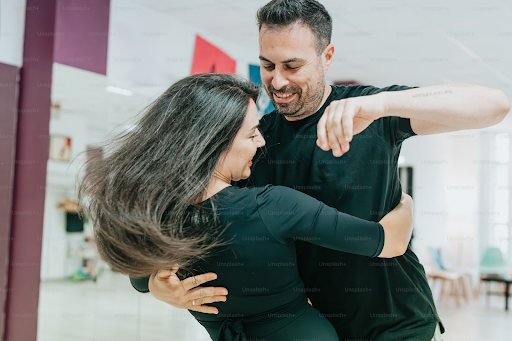
While salsa has Latin roots, the well-known term “salsa” first became popular in New York City. Many people assume salsa originated in Latin America, but one of the most surprising facts about salsa dance is that it actually took shape in New York City, not in Cuba or Puerto Rico.
In the 1940s and 1950s, Afro-Cuban rhythms blended with big band jazz in New York’s mambo clubs. At the same time, a massive Puerto Rican community brought its own cultural identity into the mix, especially in Spanish Harlem. This fusion didn’t just create new music; it built the foundation of what we now call salsa. What makes this one of the most interesting facts about salsa dance is how deeply it reflects migration and identity.
The U.S. is home to some of the world’s best salsa dancers, with major salsa hubs in New York, Los Angeles, Miami, and the San Francisco Bay Area.
3. Salsa Began in the 1960s
The term “salsa” was created in 1964 by Fania Records, a label founded by Dominican-born musician Johnny Pacheco and Italian-American lawyer Jerry Masucci. Fania brought together various Latin music styles being played in New York and marketed them under the name “salsa,” helping the music gain worldwide fame. The dance style soon followed, with pioneers like Eddie Torres and Johnny Vazquez formalizing the steps and teaching them in dance schools.
Did You Know?
Salsa footwork was standardized not in a Latin American dance hall, but in a New York City dance studio. Eddie Torres, often called "The Mambo King," is widely credited with codifying On2 timing (also known as New York style), bringing consistency to what had previously been highly improvisational street dancing.
4. Salsa Timing Has Two Competing Schools, and Both Are Right
One of the most fascinating and slightly contentious salsa facts among serious dancers is the On1 vs. On2 debate. These refer to which beat of the music a dancer breaks on (starts their weight shift), and the two approaches produce noticeably different dancing.
On1 (LA Style) tends to feel more natural for beginners and is visually powerful—ideal for performances and competitions. On2 (New York Style) is considered by many advanced dancers to sync more naturally with the clave rhythm that underlies salsa music, producing a more musical feel.
Neither is universally "correct." Most experienced dancers eventually become comfortable with both. But choosing which to learn first is a real decision worth discussing with your instructor.
READ MORE: Learn the key differences between Salsa On1 and On2 in our detailed blog on Salsa timing.
5. There Are Six Styles of Salsa Dancing

Many beginners don’t realize that salsa isn’t just one type of dance. In fact, there are six different styles danced around the world! The six styles are: New York style, LA style, Colombian salsa, Cuban salsa, Rueda de Casino, and Salsa Choke.
Some styles are similar enough that dancers can easily switch between them, while others are completely different and require learning new moves. Take a look at the table below to learn more about these popular types of salsa dance styles:
Style | Origin | Timing | Vibe |
|---|---|---|---|
New York (On2) | NYC, USA | Beat 2 | Elegant, musical |
LA Style (On1) | Los Angeles, USA | Beat 1 | Flashy, theatrical |
Cuban/Casino | Cuba | Variable | Circular, grounded |
Cali/Colombian | Cali, Colombia | On1 | Fast footwork |
Rueda de Casino | Cuba | Group | Social, rotating |
Salsa Choke | Colombia | Variable | Urban, hip-hop |
Wondering about the difference between these salsa styles? Each one varies in timing, movement, and overall feel, giving every style a unique experience on the dance floor.
QUICK INFO: And if you are also curious about how salsa differs from other Latin dances like Bachata? Here is a quick comparison. Both are popular Latin dances, but they feel completely different. Salsa is faster, more energetic, and focuses on spins, footwork, and timing, while bachata is slower, smoother, and more intimate, with simple steps and a stronger partner connection.
6. Salsa Burns Up to 400 Calories Per Hour
Here's a salsa dancing fact that doubles as a fitness argument. Salsa is one of the fastest-paced social dances, making it a fantastic workout! With salsa music ranging from 150 to 220 beats per minute, you can burn 300-400 calories per hour while dancing. This is comparable to cycling at a moderate pace or a light jog. Beyond burning calories, salsa helps improve flexibility, strength, and even mental sharpness as you learn and practice new moves. It’s like a full-body activity that keeps both your mind and muscles engaged while making exercise feel enjoyable and social.
7. The Word “Salsa” Means “Sauce” in Spanish
One of the more fun facts about salsa dance is the deliberate double meaning of its name. "Salsa" in Spanish simply means sauce, and just like a good sauce, salsa music and dance is a combination of ingredients that creates something greater than the sum of its parts. The name was chosen precisely because it captured that blended, layered, spicy quality. Interestingly, salsa, as a condiment, has its own long history. The Aztecs were using salsa as a condiment long before it had a name. It wasn’t until 1571 that a Spanish priest, Alonso de Molina, gave it the name “salsa,” which simply means “sauce” in English.
So, if you’re ever in a Spanish-speaking country and ask for salsa to pair with your taco, you’re really just asking for the ingredient “sauce.” But don’t worry—they’ll know exactly what you mean.
8. "Shines" Were Born From Musical Breaks in 1960s New York
In salsa dancing, "shines" are solo moves where dancers can show off their creativity and style. They're one of the most expressive and exciting parts of watching advanced salsa, but most people don't know where they came from. Shines emerged organically in the New York salsa scene of the 1960s and 70s. When bands hit rhythmic breaks or extended percussion solos, dancers would release their partner and fill the space with personal footwork and styling. Over time, these improvised moments became formalized into a recognized component of the dance. Today, shines are a big part of salsa, letting dancers express themselves and connect with the music in a more personal way.
9. Salsa Music Follows the Clave Rhythm (Even When You Don’t Hear It)
One of the most important yet hidden facts about salsa dance is the role of the clave rhythm. The clave is a repeating rhythmic pattern that acts as the backbone of salsa music, guiding both musicians and dancers. Even when it’s not clearly heard in a song, experienced dancers naturally follow its structure.
There are two main types, including 2-3 and 3-2 clave, and understanding them can significantly improve timing and musical connection. Many beginners overlook this concept, but learning to recognize the clave helps dancers stay in sync with the music and adds a deeper level of precision and expression.
10. Salsa Is Mostly Improvised, Not Choreographed

Unlike stage performances, most salsa dancing is not pre-planned. It is a lead-and-follow dance where movements are created in real time. This means every dance can feel different, even with the same partner. The leader signals the next move through subtle cues, while the follower responds and adds personal styling.
This improvisational nature is what makes salsa exciting and unpredictable. It also allows dancers of different skill levels to connect and dance together. Instead of memorizing routines, dancers focus on timing, connection, and adaptability, making salsa more about communication than perfection.
11. Spins in Salsa Use Spotting Techniques
Spinning is a key element of salsa, and skilled dancers make it look effortless. One of the lesser-known salsa dancing facts is that dancers use a technique called “spotting” to maintain balance. This involves focusing on a single point while turning, quickly snapping the head around to refocus after each rotation.
Borrowed from ballet, spotting helps prevent dizziness and keeps spins controlled and precise. Without this technique, fast turns would be disorienting and unstable. Learning how to spot correctly can dramatically improve a dancer’s confidence, control, and overall performance on the dance floor.
12. Salsa Is Danced in Counts of 8, Not 4
Although salsa music often seems to follow a 4-beat rhythm, dancers actually move to an 8-count structure. Typically, steps are taken on counts 1-2-3 and 5-6-7, with pauses or holds on counts 4 and 8. This pattern creates the distinctive rhythm and flow of salsa dancing.
Understanding this structure helps dancers stay in time with the music and coordinate movements more effectively. Beginners may find this confusing at first, but with practice, it becomes second nature. Mastering the 8-count system is essential for developing good timing and transitioning smoothly between moves.
Conclusion
Salsa has one of the richest stories in all of social dance. From its New York origins to the six styles practiced on six continents, these salsa dancing facts reveal a dance far more layered than it appears. If any of this has made you want to actually try it, then the best next step is to show up to a beginner class. RF Dance in Orange County offers the finest of personalized beginner salsa classes for all age groups.
Frequently Asked Questions
Where did the Salsa dance originate?
Salsa, as a named dance and music genre, originated in New York City in the 1960s, primarily within the Caribbean immigrant communities of East Harlem. However, its musical and movement roots trace back to Cuba and Puerto Rico, drawing heavily from Cuban son, mambo, and Afro-Caribbean rhythms.
What is the history of salsa dance in brief?
Salsa evolved from a mixture of Cuban, Puerto Rican, and African musical traditions that converged in New York City during the mid-20th century. Fania Records formalized the sound under the "salsa" brand in the 1960s, and the accompanying dance style was later codified by pioneers like Eddie Torres. Since then, it has spread to every corner of the globe.
What is salsa dance?
Salsa is a partner dance based on a three-step pattern repeated within a four-beat musical phrase. It incorporates hip movement, turns, footwork, and partner connection. It is performed socially at clubs and events, and competitively at national and international festivals.
Where is salsa dance from?
Salsa dance is from New York City, though its musical and cultural roots are in Cuba, Puerto Rico, and the broader African diaspora. It is often described as a Caribbean-American creation.
What is salsa music?
Salsa music is a genre that blends Cuban son, mambo, jazz, Puerto Rican rhythms, and Afro-Caribbean percussion. It is typically characterized by a clave rhythmic pattern, brass arrangements, and a tempo ranging from roughly 150 to 220 BPM depending on the subgenre.
What is the meaning of the salsa dance?
The word "salsa" means "sauce" in Spanish, chosen to reflect the mixed, layered, flavorful nature of the music and dance. Beyond etymology, salsa dance represents a cultural fusion. A form born from the meeting of Caribbean traditions, African rhythmic heritage, and the American urban immigrant experience.
Is salsa a Latin dance?
Yes. Salsa is one of the most widely recognized Latin dances in the world, with roots in Caribbean Latin culture and strong ties to Latin music, community, and identity.
How many types of salsa dance are there?
There are six main recognized styles: New York Style (On2), LA Style (On1), Cuban Salsa (Casino), Colombian/Cali Style, Rueda de Casino, and Salsa Choke. Each has distinct timing, footwork, and cultural character.