 RF Dance

Bachata
Key Takeaways
Choosing the right salsa dancing outfit makes it easier to move, learn, and enjoy class from day one.
Fitted, breathable clothing is the foundation — it helps your instructor correct your form and keeps you comfortable through a full hour of footwork and spins.
The best footwear has a suede or leather sole; thick rubber soles make pivots and spins difficult on your knees.
Women have great options at every level: fitted tanks and leggings for class, wrap dresses or flared skirts for socials, and Latin heels when ready.
Men do best in a fitted polo or button-down with slim chinos or joggers, paired with leather-soled loafers or dance shoes.
There is no strict dress code at RF Dance — comfort and freedom of movement always come first.
This guide covers beginner outfit ideas, shoe advice, what NOT to wear, class vs. social vs. performance looks, and real tips from RF Dance instructors.
Not sure what to wear to salsa class? You're not alone — it's one of the first questions every beginner asks, and one of the most important ones to get right.
The hardest part of your first salsa class isn't the steps, it's walking through the door feeling like you belong. The right salsa dancing outfit removes every physical barrier between you and the dance floor. When your clothes move with you, your hips follow. When your shoes glide instead of grip, your spins stop fighting you.
Salsa is a high-energy partner dance built on footwork, spins, and connection. The wrong fabric traps heat. The wrong shoes make pivots painful. The wrong fit gets in your partner's way. Getting your salsa dance attire right from the start means you can focus entirely on learning — not adjusting your clothes mid-spin.
Here's the complete breakdown of what to wear for salsa dancing — for class, for socials, and everything in between.
Short on time? Here is what you need to know about the salsa dress code before your first class:
Wear fitted, breathable clothing that moves with you — leggings, joggers, or a dance skirt for women; fitted trousers or chinos for men.
Avoid thick denim, baggy tops, or anything with a stiff waistband.
Shoes matter most. For your first class, a clean flat-soled sneaker or flexible flat will do. Dance shoes with suede or leather soles are the upgrade.
No strict dress code at RF Dance. Come comfortable, come curious.
Keep reading for the full salsa dancing outfit breakdown by gender, setting, and experience level.
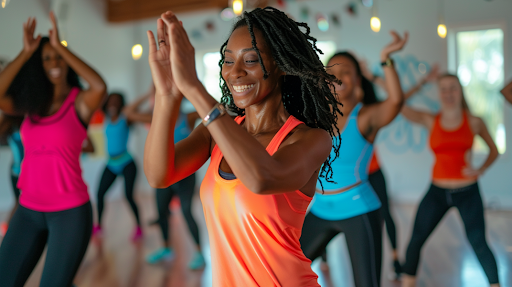
Attending your first salsa dance lesson can be exciting as well as challenging at the same time. However, with the right preparation, especially when it comes to salsa dance clothes, you can ensure that nothing hinders your body's movement. So, prepare yourself in advance to get the most out of your salsa class.
Since salsa involves a lot of movement, spins, and footwork that can make you sweat, pay attention to the material and fit when choosing a salsa dancing outfit. Choose attire that allows freedom of movement and comfort, and make sure the fabric has moisture-wicking properties.
A lightweight, breathable top paired with stretchy leggings
A crop top combined with a flowy or fitted skirt
A cotton or linen tank top with joggers
A bodysuit; keeps everything in place during spins and dips
Sports bra with shorts for a casual salsa dancing outfit
A midi-length wrap dress for a stylish yet functional look
A breathable fitted polo shirt or performance tee
A lightweight button-down shirt with sleeves rolled up
Cotton or linen trousers with a full range of motion
Smart-fit joggers or chinos, not too baggy
Avoid sleeveless tanks in partnered classes (out of courtesy to your partner)
Partner Reminder: Salsa is a partner dance. Whatever you choose to wear, consider how it affects the person you're dancing with. Clothing that is too loose can tangle during turns; anything too slippery or rough can affect handholds. The best salsa dancing attire works for both of you.
If you are coming to your very first salsa class, the most important thing to know is this: nobody is judging your outfit. At RF Dance, beginners walk in wearing everything from gym shorts to office trousers. What matters is that you can move.
That said, the right salsa class outfit can genuinely make learning easier. Here is why:
Fitted clothing helps your instructor see your body position and give better feedback. When a shirt hangs loose, it can hide whether your shoulders are square or your hip is moving correctly.
Breathable fabric keeps you comfortable through a full hour of footwork, spins, and partner work. Southern California evenings can be warm, even indoors, and salsa is a workout.
Flexible bottoms let your hips move freely. Salsa footwork is hip-driven. Stiff denim or tight waistbands resist movement rather than support it.
Quick beginner outfit ideas to grab right now:
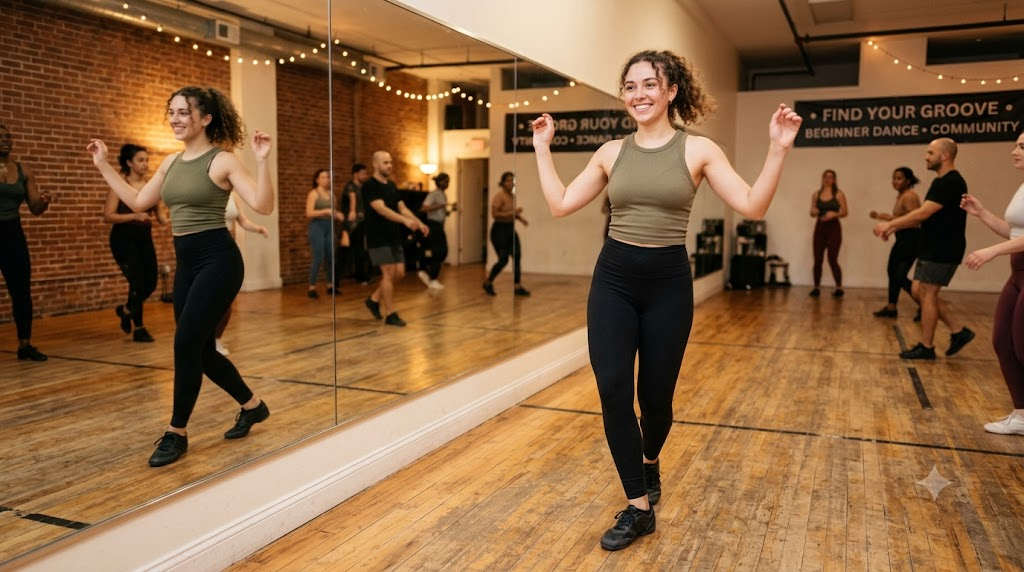
A fitted tank top and high-waisted leggings — the easiest and most practical salsa class outfit for beginners
A stretchy midi skirt with a tucked-in top (adds Latin flair without any restriction)
A wrap dress in jersey fabric — great if you want to feel dressed up but still move freely
A breathable fitted polo with chinos or slim-fit joggers
A lightweight button-down with sleeves rolled to the elbow and cotton trousers
Shoes for your first class:
Clean, flat-soled sneakers are fine for your very first session. Avoid thick rubber soles that grip the floor too much — they make pivots and spins hard on your knees. When you are ready to level up, suede-sole dance shoes make an immediate difference.
New to salsa entirely? Read our guide on whether salsa is a good dance for beginners before your first class.
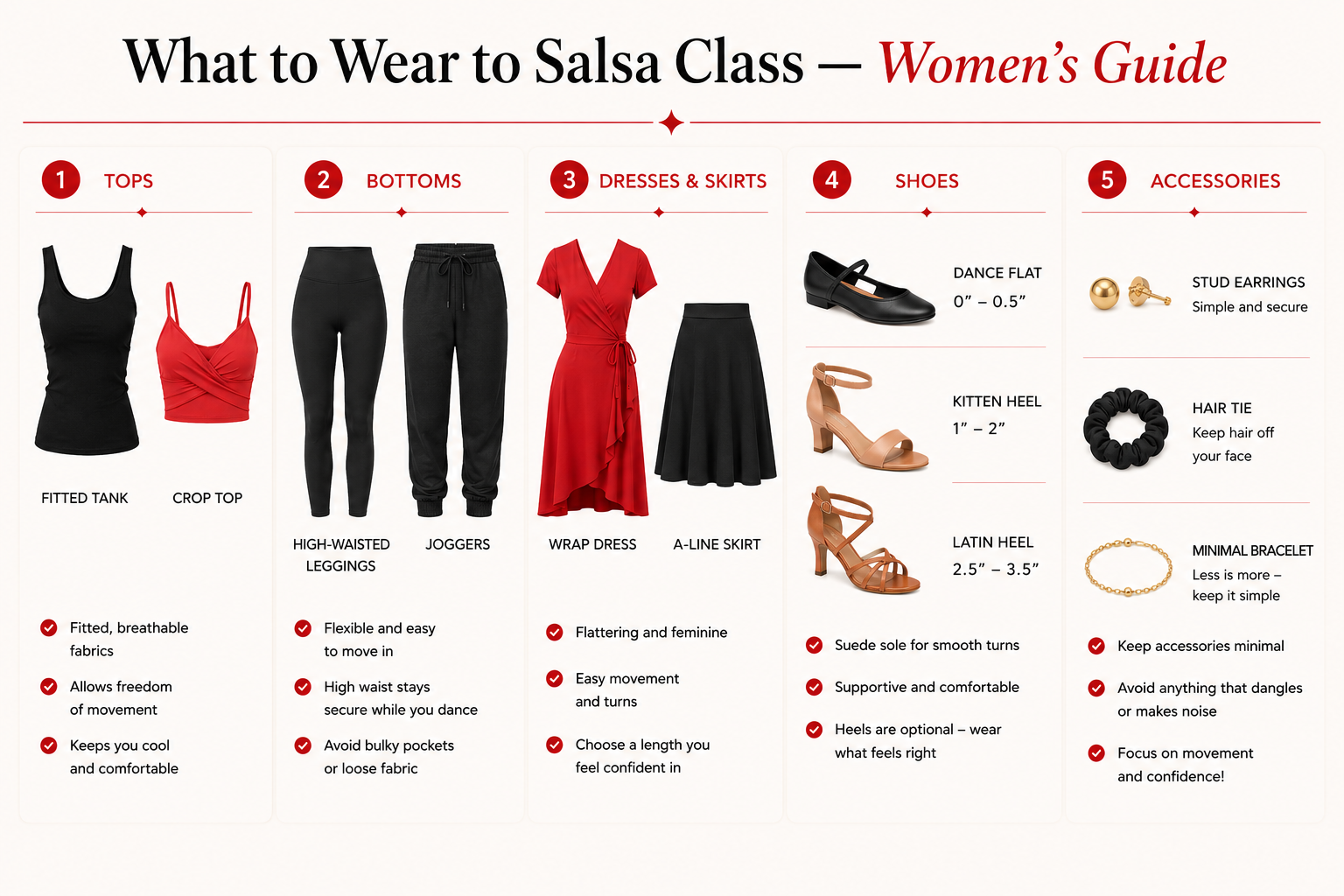
Salsa dance attire for women is all about freedom, fit, and a touch of Latin style. Here is a breakdown of what works well at each level and in each setting.
Choose tops that fit close to the body without being restrictive. Fitted tanks, camisoles, cropped tees, and form-fitting bodysuits all work well. A fitted top allows your instructor to spot and correct your body positioning — something that genuinely accelerates your progress. Avoid anything oversized, strapless, or with a loose hem that could catch your partner's hands mid-turn.
Best for class: fitted jersey tank or form-fitting crop top
Best for socials: off-shoulder blouse, lace top, or anything with a little Latin flair
Look for moisture-wicking or stretch jersey fabric — especially in warmer Orange County months
High-waisted leggings are the most practical choice for class. They stay in place through spins and dips, hold everything secure, and look great on the dance floor. Stretchy joggers or fitted athletic trousers also work well.
High-waisted leggings (not sheer) — best all-around option for beginner and intermediate classes
Stretchy joggers or fitted cotton trousers for a more casual look
Avoid heavy denim (traps heat, restricts hip movement) and overly tight miniskirts
Dresses and skirts are a natural fit for salsa — they move beautifully and add an authentic Latin feel to your dancing. The key is length and fabric. Knee-length to midi-length is the sweet spot: long enough to feel elegant, short enough to step freely.
Wrap dresses in jersey fabric — flattering, adjustable, and comfortable for a full class
A-line or flared skirts — swirl beautifully during turns and spins
Practice skirts (designed for dance) — lightweight, often with built-in shorts underneath
Avoid floor-length gowns — they catch heels mid-step, which is a real safety hazard
Shoes are the single most important part of your salsa dance attire. The right sole makes pivots effortless; the wrong sole fights against every spin.
Suede-sole dance flats — ideal for beginners and all-day comfort; brands like Capezio and Bloch offer affordable entry options
Kitten heels (1–1.5 inches) — a beginner-friendly heel that adds elevation without the fatigue of a full Latin heel
Latin dance heels (1.5–2.5 inches with a flared block heel) — best for intermediate dancers; improves hip movement and posture
First class? Clean, flat-soled sneakers work fine. Avoid thick rubber soles and flip-flops.
Keep accessories minimal and secure. Salsa is a close-partner dance, and anything sharp, dangly, or loose becomes a hazard for your dance partner.
Stud earrings or small hoops — elegant without the snag risk of long drops
Thin bracelet or watch on a stretch band — avoid hard clasps that scratch
Hair up or securely pinned back — loose hair whips your partner during turns
If wearing makeup, choose waterproof formulas — salsa is a genuine workout
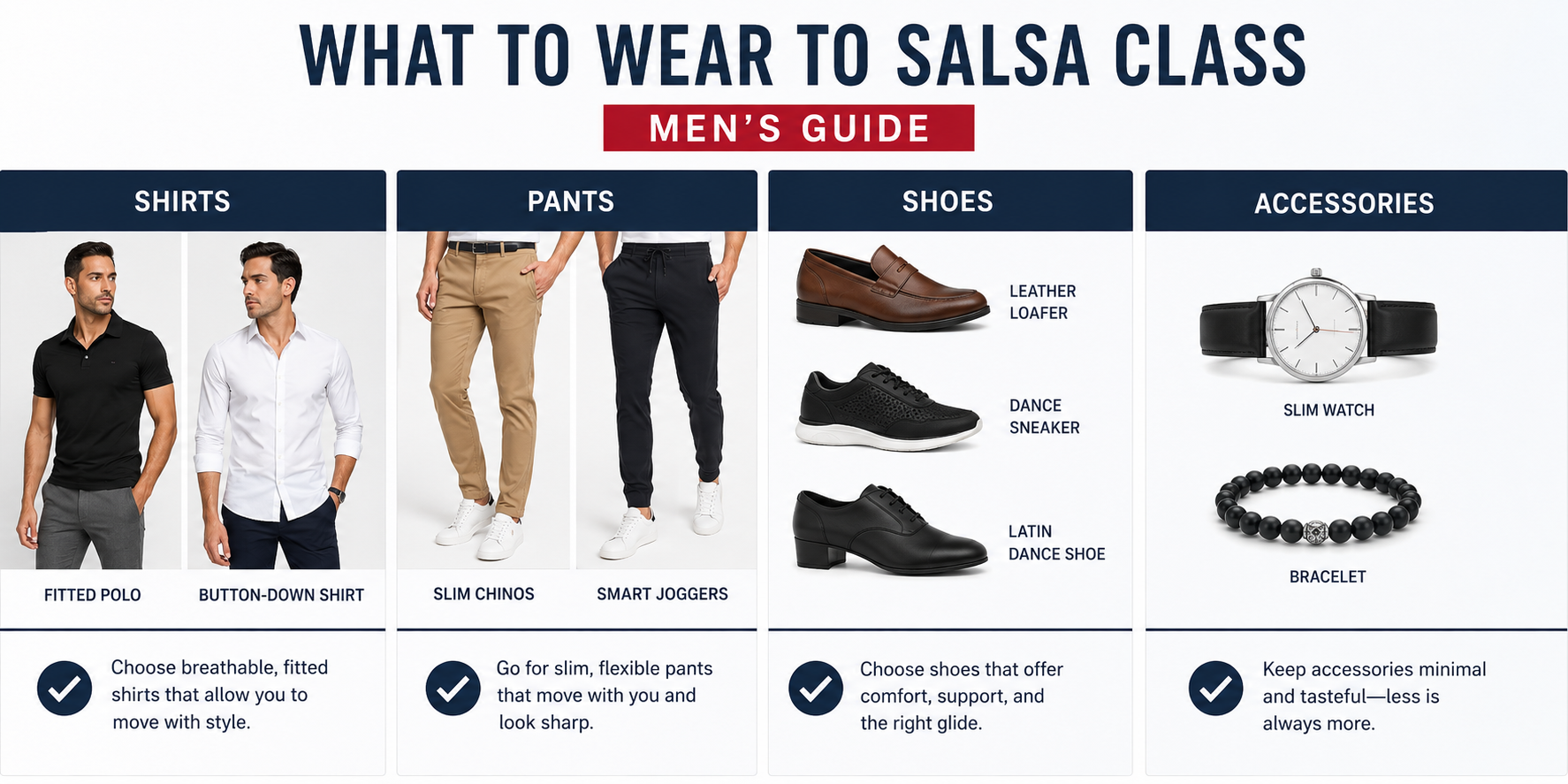
Men's salsa dance attire follows the same principle: fitted, breathable, and built for movement. The good news is that salsa has no formal dress requirement for men at the class level.
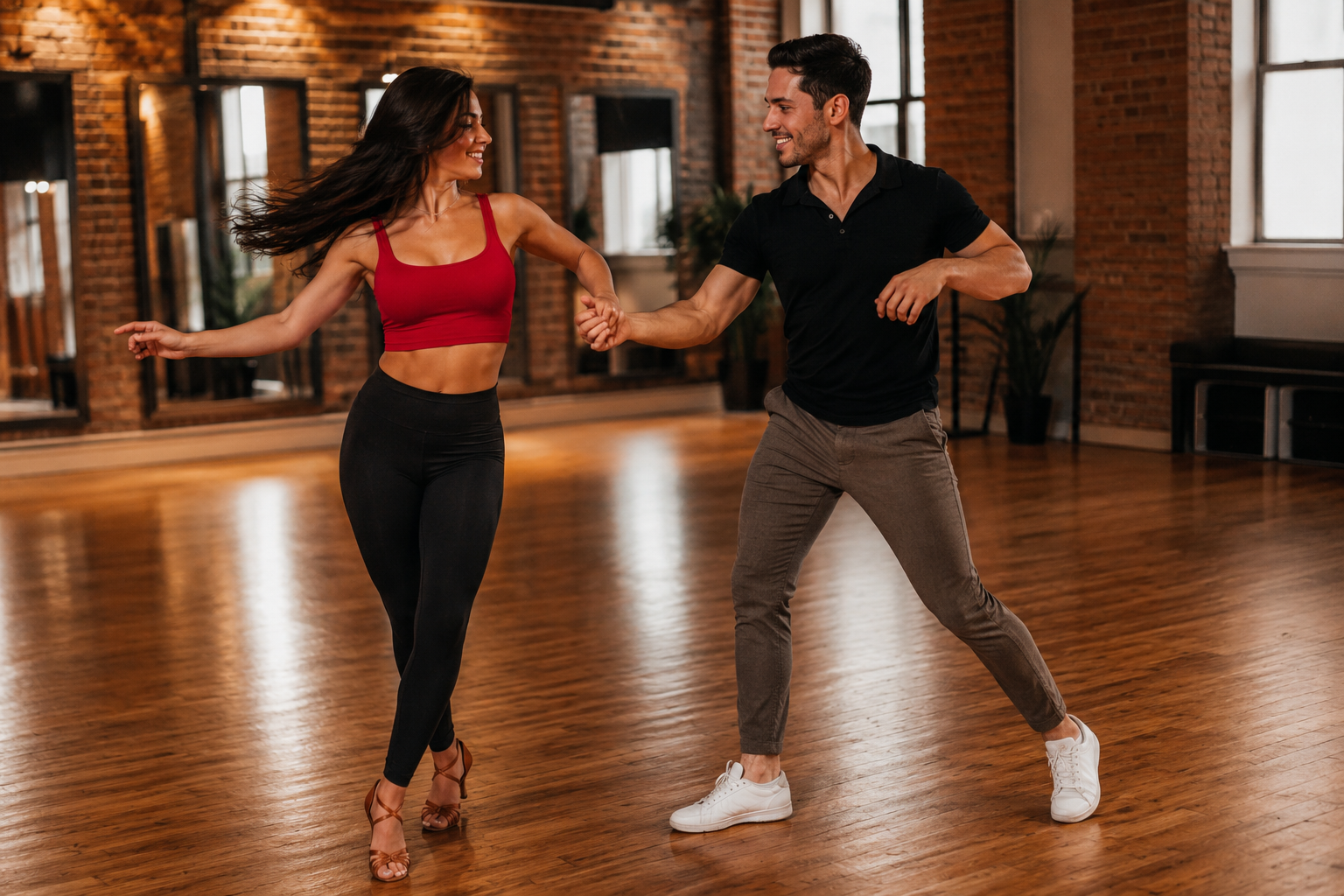
The best shirts for salsa class are lightweight and fitted without being tight. Fitted polo shirts and performance tees are excellent all-round options. Lightweight button-down shirts worn with sleeves rolled up are a step up for socials — they look intentional on the dance floor.
Fitted polo or performance tee — the most practical choice for class
Lightweight cotton or moisture-wicking button-down — great for socials or when you want to make an effort
Avoid baggy or heavy shirts that bunch up and restrict arm movement during leads
Skip sleeveless tanks in partner classes — skin-to-skin contact in holds is uncomfortable for your partner
Salsa requires hip rotation, wide steps, and lunges. Your trousers need to accommodate that range of motion without pulling or pinching.
Slim-fit chinos or cotton trousers with a bit of stretch — the ideal all-round choice for class and social
Smart-fit joggers in a neutral colour — comfortable for class, still presentable
Avoid rigid denim, cargo trousers, or anything with a very low crotch — these restrict the leg lift needed in basic salsa footwork
Men's salsa footwear follows the same core rule as women's: you need a sole that glides rather than grips. The difference between a rubber-soled sneaker and a leather-soled loafer on the dance floor is immediately noticeable.
Leather-soled loafers or oxfords — smart, functional, and ideal for intermediate to advanced dancers
Latin dance shoes — specifically designed for footwork precision; suede bottoms allow effortless pivots
Dance sneakers (partial suede sole) — a comfortable bridge between athletic shoes and dance shoes; good for beginners
Avoid: heavy boots, sandals, or outdoor shoes brought straight from the street — grit on the sole damages studio floors
Men can keep accessories simple. A clean watch or a slim bracelet adds a finished look without creating any hazards on the dance floor.
A slim watch or simple bracelet — fine as long as it does not have a sharp clasp or chunky edges
Avoid rings with raised settings — they can scratch a partner's hands during close holds
Bring a spare shirt to a social night — a small courtesy that makes you a better partner across a multi-hour event
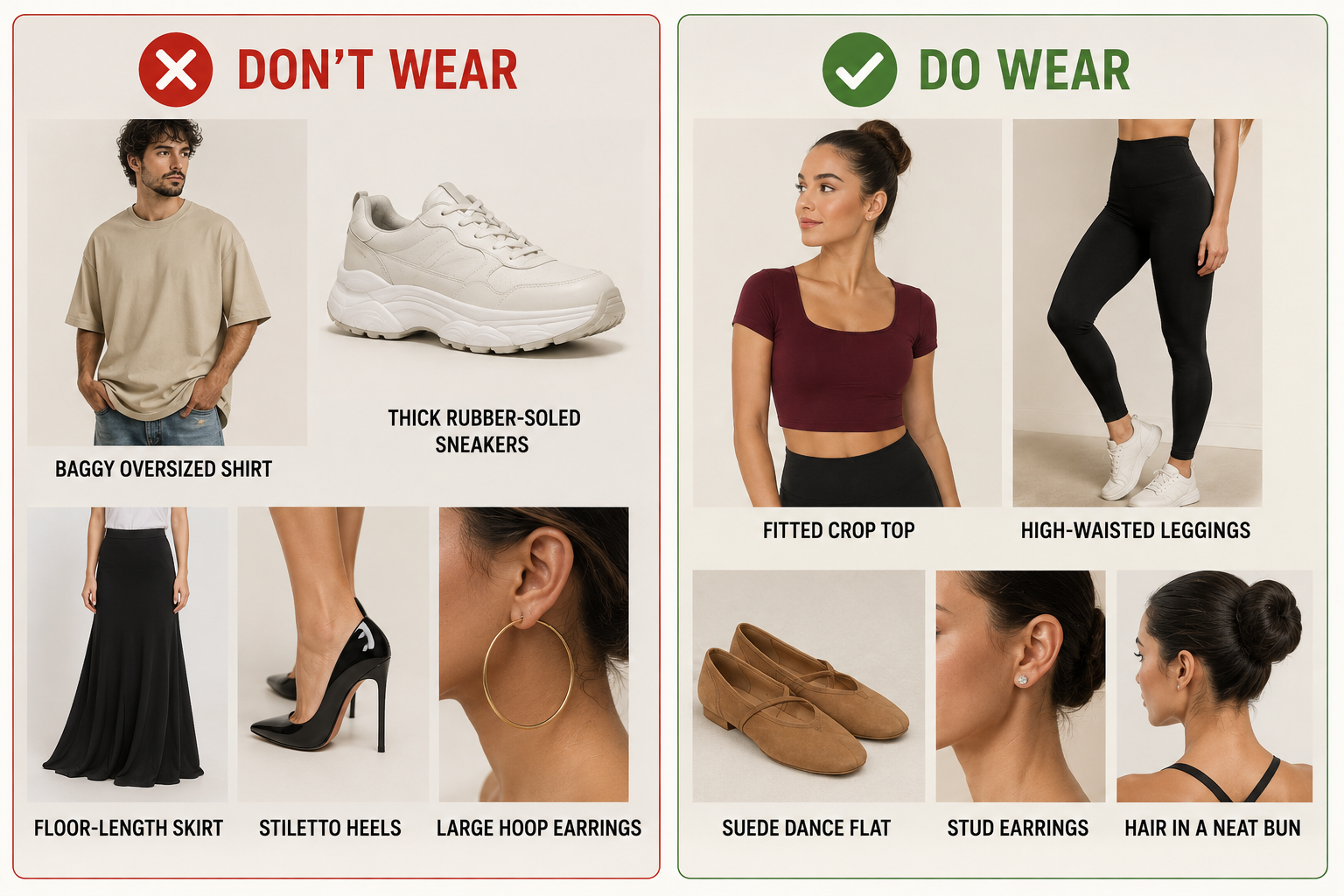
Knowing what to avoid is just as important as knowing what to wear. The following items are commonly worn by first-timers and almost always cause problems on the dance floor:
Baggy tops or oversized bottoms: They interrupt movement and can catch your partner's hands or feet during turns.
Heavy fabrics like thick denim: They trap heat rapidly and restrict hip movement, making even basic steps uncomfortable.
Strapless tops: They lack support and tend to slip down during active dance moves.
Very tight, very short, or floor-length skirts: They either restrict movement entirely or risk catching on your heels mid-step.
Strong perfume or cologne: In close partnered dancing, an overpowering scent is inconsiderate to your dance partner.
Dangly or sharp jewelry: Long earrings, chunky necklaces, and statement rings can scratch or snag during spins.
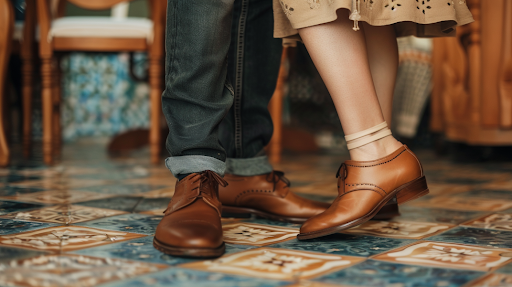
Like the right salsa dance outfit, proper footwear is essential for salsa dancing. If you're just starting out, lightweight sneakers or flexible flats will do the job. When ready for salsa, you can opt for suede or leather shoes. They help you move and turn with ease.
For beginners, the shoe sole must be smooth and flat. Once you have learned salsa and gained more confidence, girls can choose low to medium heels. Remember that heels may not be comfortable for everyone, so prioritize your comfort.
Shoe Type | Best For | Why It Works | Footwear to Avoid | Why to Avoid |
|---|---|---|---|---|
Suede-soled dance flats | Women; beginners to intermediate | Smooth pivot, secure fit, no heel fatigue | Thick rubber-soled sneakers | Grip the floor too aggressively, making spins and pivots difficult and hard on the knees |
Latin heels / Character heels (1.5"–2.5") | Women; intermediate to advanced | Elevates posture, improves hip movement; flared heel provides stability | Flip flops or open-toe sandals | No support and a genuine slip hazard |
Kitten heels (1"–1.5") | Women; beginners wanting a heel | Low heel gives balance while still elongating the leg | Stiletto or pointed-toe heels | Can be dangerous to your partner's feet in close partnered dancing |
Leather-soled loafers | Men, all levels | Smart-looking, flexible sole that allows easy pivots | Heavy boots | Restrict ankle movement and feel clunky on the dance floor |
Latin dance shoes (men) | Men; intermediate to advanced | Designed specifically for precision footwork | Outdoor/street shoes on indoor floors | Dirt and grit from outside can damage studio floors |
Salsa classes typically start with a warm-up and finish with a cool-down session. Layering your salsa dance outfits can help you manage body temperature throughout. A lightweight cardigan or zip-up jacket that can be easily removed when you warm up is all you need.
When attending a salsa dance class, wear a few accessories. While you can choose to wear studs, a bracelet, or a wristwatch while salsa, wearing big earrings or a lengthy necklace can make it uncomfortable for you and your partner to move. Moreover, it can enhance the chances of your partner getting scratched. So, choose your accessories wisely.
For salsa classes, tie your hair back or style it in a way that keeps it off your face and out of your partner's way. A neat ponytail, bun, or braids work well.
When it comes to makeup, keep it natural and light. Since you will be sweating, consider using waterproof makeup products to avoid smudging.
This one does not get mentioned enough and it matters. If you are dancing for hours at a social night, be considerate of your partners. Bring a spare shirt and freshen up when needed.
Avoid heavy cologne or perfume. Wear deodorant. These small considerations make you a better dance partner and reflect a deeper understanding of salsa dancing attire and floor etiquette.
Last but not least, the most important factor in learning salsa is confidence. Salsa is about having fun and enjoying the music and movement. So, apart from your looks, your confidence is the key to nailing all the challenges.
Not all salsa events have the same vibe — and the right salsa dress code shifts depending on where you are going. Here is a quick comparison so you always show up appropriately dressed.
Setting | Outfit | Shoes | Overall Vibe |
|---|---|---|---|
Salsa class (e.g. RF Dance, OC) | Fitted tee, leggings, joggers, or a practice skirt. Comfortable and functional. | Dance flats, dance sneakers, or clean flat-soled shoes. Heels optional. | Relaxed. Focus is on learning, not impressing. Comfort first. |
Salsa social / night out | Smart-casual. A little more style than class — flared skirt, strappy top, fitted button-down for men. | Latin dance heels for women. Leather-soled loafers or dance shoes for men. | Dressed up but moveable. You are here to dance all night. |
Salsa performance / congress | Full costume or coordinated look. Fitted, bold, and designed to read from a distance. | Performance-grade Latin heels or character shoes. | Glamorous. Stage presence matters as much as technique. |
If you are new to the Orange County salsa scene, our monthly RF Dance socials are a great first step into the social dancing world. Smart-casual is the right call — think of it like a fun night out with a dress code of "you actually want to move." Curious about the history behind the dance itself? Check out these 12 little-known facts about salsa dancing to impress your new dance friends.
We have welcomed hundreds of first-timers through the doors at our Santa Ana studio. Here is what we actually see — and what works.
The most common beginner mistake:
Students often arrive in their regular gym outfit: loose athletic shorts, an oversized tee, and thick-soled trainers. This usually works fine for the warm-up, but the moment partner work begins, the loose shirt bunches up during holds and the thick soles make even simple two-step pivots feel awkward.
Wear something close-fitting from the start. It genuinely helps instructors see whether your frame, shoulders, and hip position are correct — and correcting those early saves you weeks of unlearning bad habits.
Plan ahead for heat. Even with air conditioning, an hour of salsa is a workout in Orange County. Light, moisture-wicking fabric is worth the small upgrade over a standard cotton tee.
Shoes are the one investment worth making early. You do not need to spend a lot — a $35–45 suede-sole dance flat changes the experience completely compared to a rubber-soled sneaker.
Our Santa Ana studio has a smooth hardwood floor and a state-of-the-art sound system. The floor is designed for dance, which means street shoes with grit on the sole can cause real damage. Please change into clean indoor shoes before stepping onto the floor — we appreciate it, and so does the next class.
Ready to see what your first class actually looks like? Our salsa dance classes in Orange County page has full schedule details, pricing, and the intro offer for new students.
The right salsa dancing outfit is crucial for comfort and ease of movement. Whether you're figuring out what to wear to a salsa class for the first time or putting together a casual salsa dancing attire for a social night, the principles stay the same: lightweight, breathable, and close-fitting without being restrictive.
Pay attention to layers, accessories, hair, and makeup to enhance your overall salsa experience. With the right preparation, you can focus entirely on enjoying the dance and improving your skills.
Ready to hit the dance floor in Orange County
Your First Salsa Class in Orange County — Just Show Up. Try your first class for $10, or grab a full week of unlimited classes for $49.
Book your class.Experience Salsa, Bachata, or Cumbia with Orange County’s favorite homegrown dance school- RF Dance. Sign up now and get your first class for only $5!
Unedited reviews from people who walked in without a partner and without a clue.
“RF Dance is an amazing place. The instructors are encouraging and passionate, and my daughter looks forward to her classes every single week.”Sophia M.