 RF Dance

How To Develop Your Own Dance Style
Posted on - 29 January 2026
Summary
Explains what a dance style really is and why it matters for self-expression.
Shows beginners how to build style through fundamentals, not copying.
Breaks down freestyle, music connection, and personal movement patterns.
Shares a simple weekly practice framework anyone can follow.
Covers common beginner mistakes and how to avoid them.
If you’ve ever caught yourself thinking, “I look like everyone else when I dance,” you’re not alone. Most dancers start by copying. That’s normal. But eventually, copying stops feeling satisfying.
This guide is for beginners and dancers who feel stuck between learning steps and actually expressing themselves. You don’t need more motivation or hype. You need clarity.
What follows is a practical, grounded breakdown of how dancers develop their own style over time—through movement, music, and self-awareness. No shortcuts. No fluff. Just a process that works.
What Is a Dance Style and Why It Matters for Self-Expression
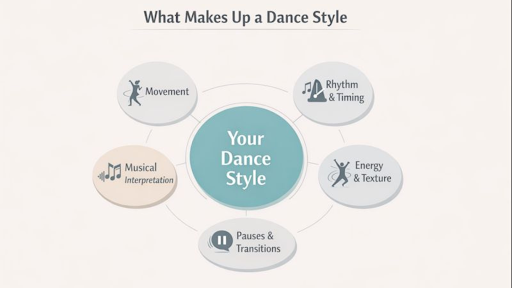
A dance style isn’t a genre. It’s how you move.
Your dance style is made up of your movement choices, rhythm, energy, pauses, transitions, and how you interpret music. Two dancers can perform the same step and look completely different—and that difference is style.
Learning steps teaches you what to do. Developing a style is about how you do it.
When dancers work on dance self-expression, several things start to shift:
Confidence increases because movement feels intentional
Musicality improves as you respond to sound, not counts
Creativity grows through variation and exploration
Social dancing feels better because your movement feels natural
Style isn’t about standing out. It’s about feeling honest in your body
Build Your Foundation Before Creating Your Own Dance Style
Before you try to be unique, you need something solid to stand on. Style without foundation often looks messy instead of expressive.
Explore Different Dance Styles to Expand Creative Movement
Exposure builds vocabulary. When you explore multiple styles, your body learns new ways to move.
You don’t need to master everything. You just need to experience contrast.
| Dance Style | What It Teaches You |
|---|---|
| Ballet | Control, posture, balance |
| Hip-hop | Groove, texture, confidence |
| Jazz | Precision, dynamics |
| Salsa | Rhythm, connection |
| Bachata | Body awareness, musical phrasing |
This variety fuels creative dance movement and gives your body more options to choose from later.
Master Fundamentals Instead of Rushing to Be Unique
Here’s the truth most beginners don’t want to hear: fundamentals are what make style look clean.
Strong basics help you:
Control timing
Finish movements clearly
Make variations look intentional
Without fundamentals, personal style often turns into rushed or unbalanced movement. Depth always beats speed.
Use Cross-Training to Improve Body Awareness
Dance style lives in the body, not just the steps.
Cross-training improves how you feel movement internally.
Helpful options include:
Yoga for flexibility and control
Strength training for stability
Mobility work for joint awareness
Light cardio for stamina
Better body awareness leads to smoother transitions and clearer expression.
Discover Your Personal Dance Voice
This is where most blogs stay vague. Let’s get specific.
Freestyle Practice to Unlock Natural Movement
Freestyling isn’t random movement. It’s structured exploration.
Try this simple drill:
Set a timer for 5–10 minutes
Choose music you enjoy
Move without planning
Don’t stop when it feels awkward
Afterward, ask yourself:
Which movements repeated naturally?
Where did my body feel relaxed?
When did movement feel forced?
This is one of the most effective dance practice tips for beginners.
Learn to Connect Movement With Music
Most dancers hear the beat. Fewer dancers hear the music.
Start listening for:
Accents
Lyrics and emotion
Instrument changes
Silence and pauses
Different music choices bring out different sides of your personality. Music shapes your dance identity more than steps ever will.
How Life Experiences Shape Dance Self-Expression
Dance reflects who you are off the floor.
Your confidence, culture, personality, and emotional experiences all influence how you move. That’s why no two dancers feel the same, even in the same class.
Dance self-expression grows when you allow your real self to show up instead of trying to impress.
Refine and Develop Your Own Dance Style Over Time
Style develops through awareness and adjustment.
Record Yourself to Identify Strengths and Habits
Recording removes guesswork.
What to record:
Freestyle sessions
Basic combinations
Musical interpretation drills
When reviewing:
Look for consistency, not perfection
Identify habits that appear repeatedly
Separate what feels good from what looks rushed
Keep what feels authentic. Improve what limits clarity.
Ask for Feedback Without Losing Your Identity
Feedback should sharpen you, not erase you.
Ask:
“What feels natural in my movement?”
“Where do I rush or hesitate?”
“What stands out, good or bad?”
Choose instructors and peers who respect individuality. Filter advice thoughtfully.
Customize Moves Instead of Copying Them
This is how dancers create their own dance steps.
Take a learned move and change:
Tempo
Size
Direction
Pauses
Styling
Instead of asking, “What’s the right way?” ask, “How would I move here?”
Be Patient — Style Is Built, Not Found
Style develops in layers.
Most beginners notice early patterns within a few months. Refinement takes years. That’s normal.
There’s no finish line—only evolution.
Common Mistakes Beginners Make When Creating a Dance Style
Avoiding these will save you time and frustration.
Trying to be unique too early
Copying one dancer exclusively
Skipping fundamentals
Comparing progress constantly
Overthinking instead of feeling music
Progress comes from consistency, not comparison.
Simple Practice Framework to Develop Your Dance Style
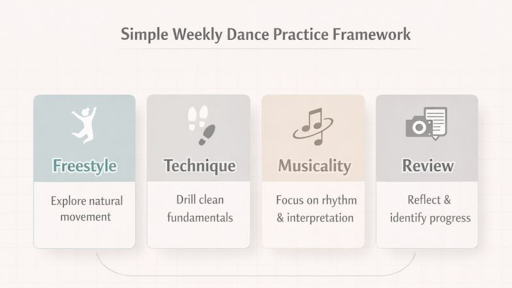
Here’s a realistic weekly structure.
Weekly Dance Practice Structure
| Session Type | Focus |
|---|---|
| Freestyle | Natural movement discovery |
| Technique | Clean fundamentals |
| Musicality | Rhythm and interpretation |
| Review | Video + reflection |
This balance supports both creativity and control.
Optional Tools to Speed Up Progress
Movement journal
Curated practice playlists
Video comparison tracking
Feedback notes
Tools don’t replace practice—but they sharpen it.
Can You Create Your Own Dance Style as a Beginner?
Yes—and often faster than you expect.
Beginners haven’t built rigid habits yet. That flexibility allows personal patterns to emerge naturally.
Focus on:
Consistency
Curiosity
Exploration
Perfection isn’t required.
How Instructors and Dance Communities Help Shape Your Style
Great instructors refine, not control.
Supportive communities provide:
Safe experimentation
Social dancing experience
Feedback through connection
Dance grows faster in healthy environments.
Final Thoughts on Developing Your Own Dance Style
Your dance style isn’t something you discover overnight. It’s something you build through movement, music, and patience.
Explore widely. Practice honestly. Let your movement evolve.
At RF Dance, we see this journey every day—dancers learning to trust their bodies, connect with music, and grow into a style that feels real to them. Whether you’re just starting out or feeling stuck, the right guidance and environment can make that process feel clearer and more confident.
Style isn’t about standing out. It’s about feeling at home in your body.
FAQs
How do you create your own dance style?
Build a foundation, freestyle regularly, connect movement to music, record yourself, and refine patterns over time.
How do I find my dance style?
Experiment with music and movement, notice what feels natural, and use feedback to refine your expression.
Is dancing a skill or a talent?
Dancing is a skill developed through practice. Talent only affects how fast you progress.
Why do dancers say 5, 6, 7, 8 instead of 1, 2, 3, 4?
It prepares dancers for musical phrasing and helps align movement with rhythm.
What is the easiest dance style for beginners?
The easiest style depends on your goals, music preference, and comfort with movement.
How can I make my own dance steps at home?
Use freestyle sessions, repeat natural movements, adjust timing, and let music guide your choices.