 RF Dance

Bachata
Walking into your first Bachata class feels a bit like showing up to a party where everyone knows each other and you're not sure of the unwritten rules. You don't know where to stand. You're not sure what you're supposed to already know. And you're quietly hoping nobody notices your hips don't naturally move that way yet.
Every single person in that room once stood exactly where you are. This guide maps what actually happens — from the moment class starts to the moment you leave — so you can walk in curious instead of bracing for impact.
Key Takeaways:
Walk in without a partner — and be fine: RF Dance beginner Bachata classes welcome solo sign-ups, and partner rotation means you'll never be the odd one out or stuck waiting.
The first 25 minutes are solo: Class starts with individual footwork before anyone pairs up, so your early nerves have nowhere to embarrass you.
Stiffness isn't a problem — it's just the starting point: The hip movement beginners worry about comes automatically from a full weight shift, not from trying to force it.
Four counts, two directions — that's the whole foundation: The Bachata basic step fits into a single 8-count phrase, and every other move you'll ever learn lives inside that structure.
Shoes matter more than your outfit:A smooth-soled flat makes the basic step noticeably easier; a chunky running shoe works against you.
One short video and some Juan Luis Guerra is all the prep you need:Over-preparing with technique videos before class can make day one harder — get familiar with the sound, then let the instructor do the rest.
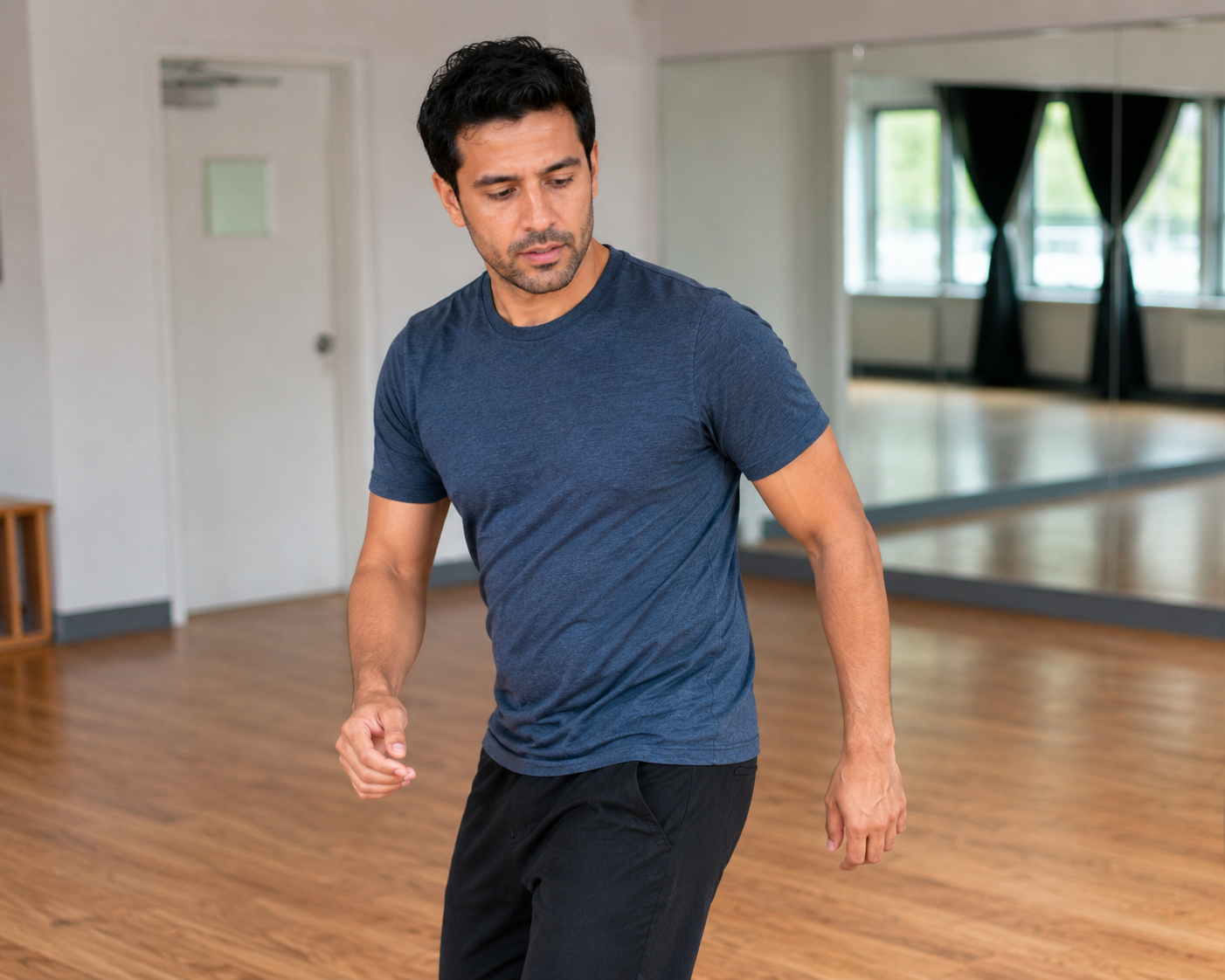
Bachata was born in the Dominican Republic in the 1960s, and while it has grown into one of the most danced partner styles on earth, its core has always been simple: an 8-count rhythm built on four grounded steps, a pause, and a hip accent. That structure is the specific reason people with no dance background at all tend to find their footing within the first two or three classes.
Unlike styles with fast syncopation or layered footwork, Bachata gives you enough time to feel the beat before it asks anything complicated. The music sits between 120 and 160 BPM — slow enough to think, rhythmic enough to move. The community culture tends to match: welcoming, patient, and genuinely happy to have new people in the room.
You also don't need to bring a partner. RF Dance beginner classes welcome solo sign-ups, and the class structure rotates partners regularly so everyone builds their foundation alongside different people.
Did you know?
UNESCO recognizes Bachata as intangible cultural heritage — you're not just learning a dance, you're stepping into a living tradition with deep roots.
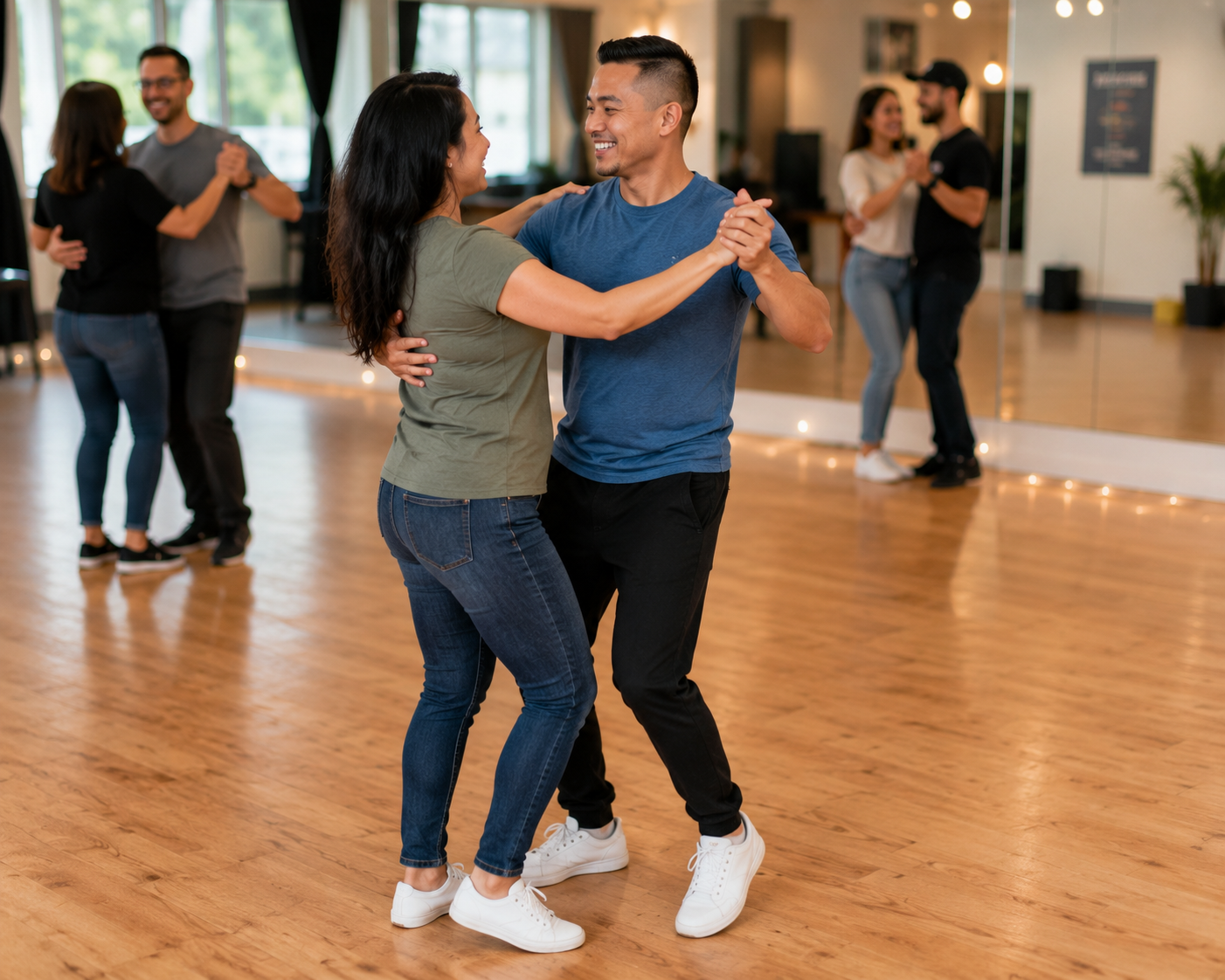
If you're coming with a partner, signing up for Bachata together is one of the better decisions you can make as a couple learning something new.
Starting from the same class means you build the same vocabulary at the same pace — no "I already know this" imbalance, no one person dragging the other through steps they don't understand yet. During dedicated partnerwork time, you'll work together, but both of you will also rotate to practice with other people during drills. That's standard class structure, not something unusual — and it actually accelerates both of you, because each of you will understand what it feels like to lead and to follow with different people.
There's also something genuinely good that happens when two people take on a new challenge side by side rather than one coaching the other from ahead. For a deeper look at how that dynamic actually affects a relationship over time, Bachata strengthens your relationship is worth reading before you book.
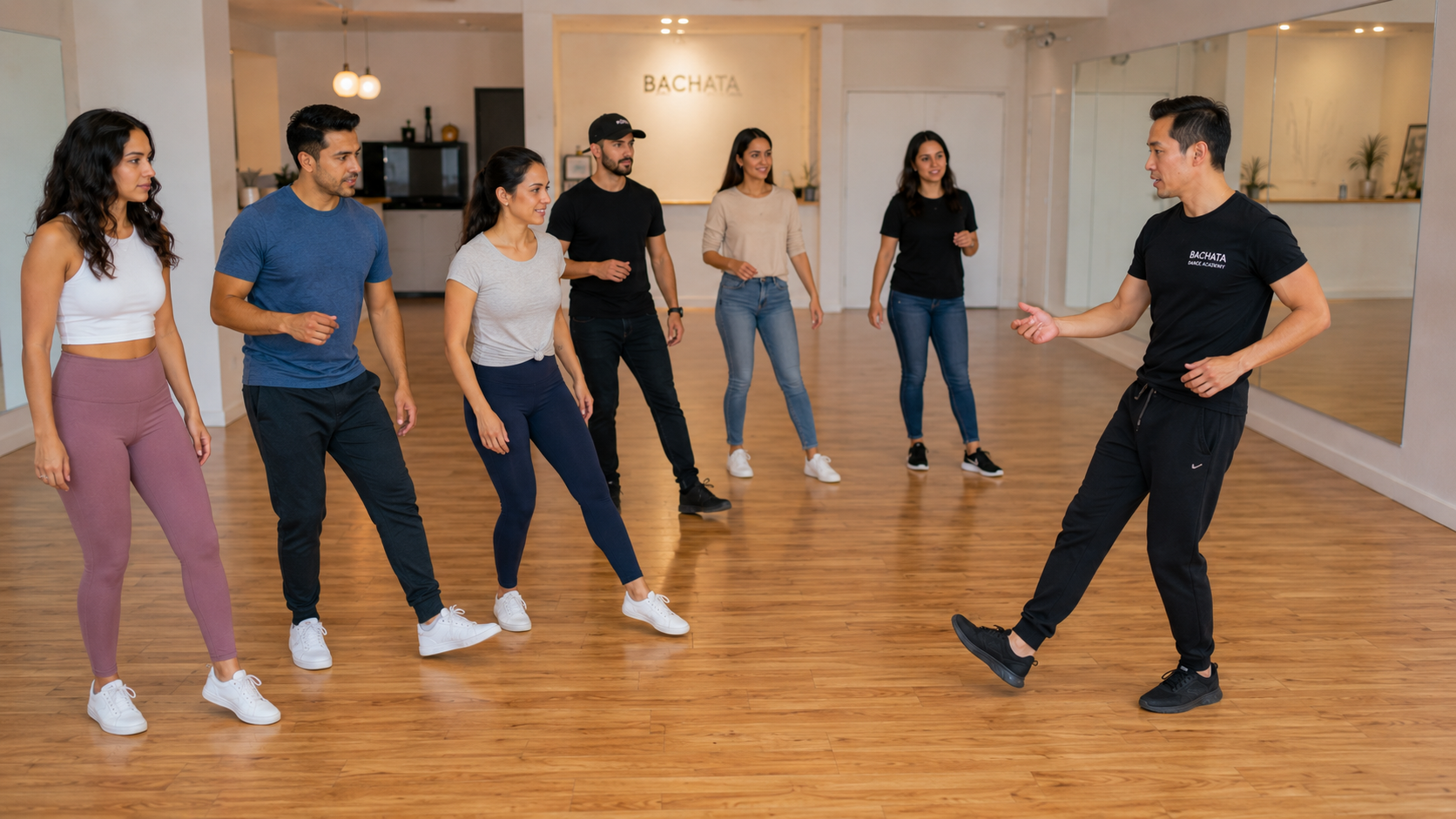
The most reliable way to stop feeling intimidated by something unknown is to make it known. Here's what a typical beginner class at RF Dance actually looks like, in order.
The first 10 minutes — warm-up: Light movement to loosen your body and transition your brain out of the day. Nobody expects you to arrive already warm. The warm-up exists precisely because the instructor knows you walked in from a parking lot, not a stretch session.
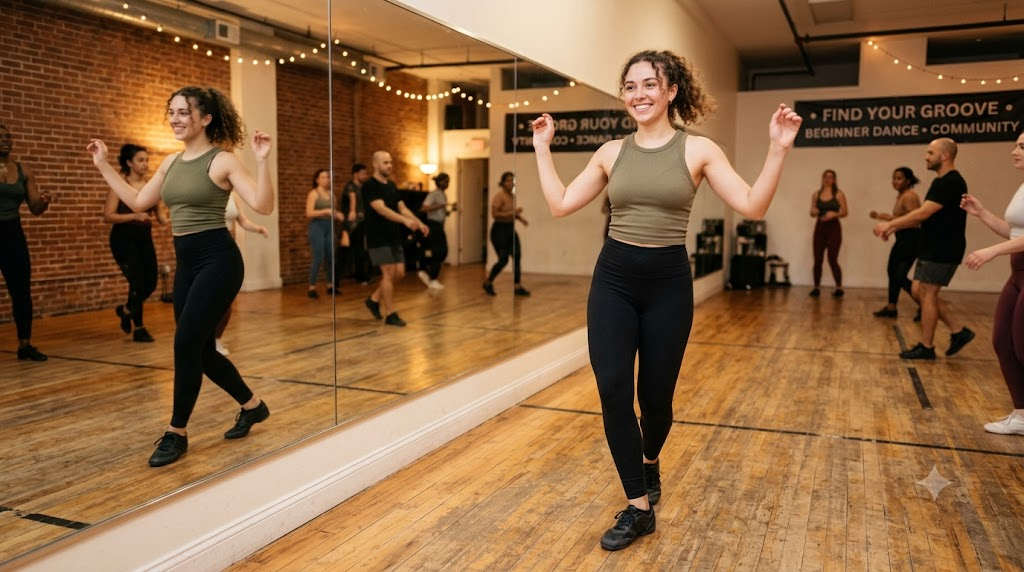
The next 25 minutes — footwork foundations: This is where the work happens solo. The instructor breaks down the basic step — weight shifts, the 4-count pattern, where the hip accent comes from — and everyone practices it at the same time, without a partner. This is the part of class where stiffness is not a problem. It's the starting material.
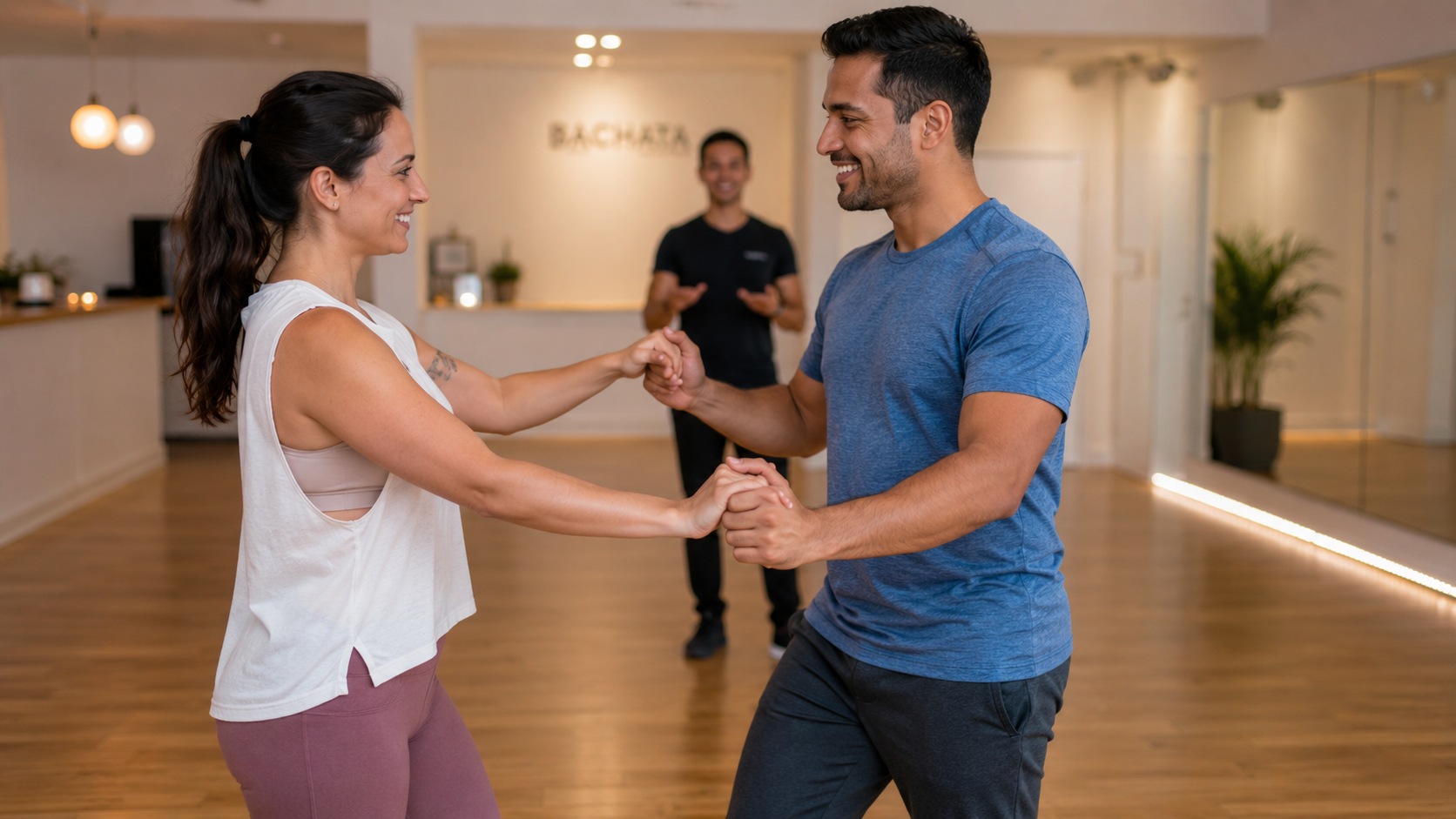
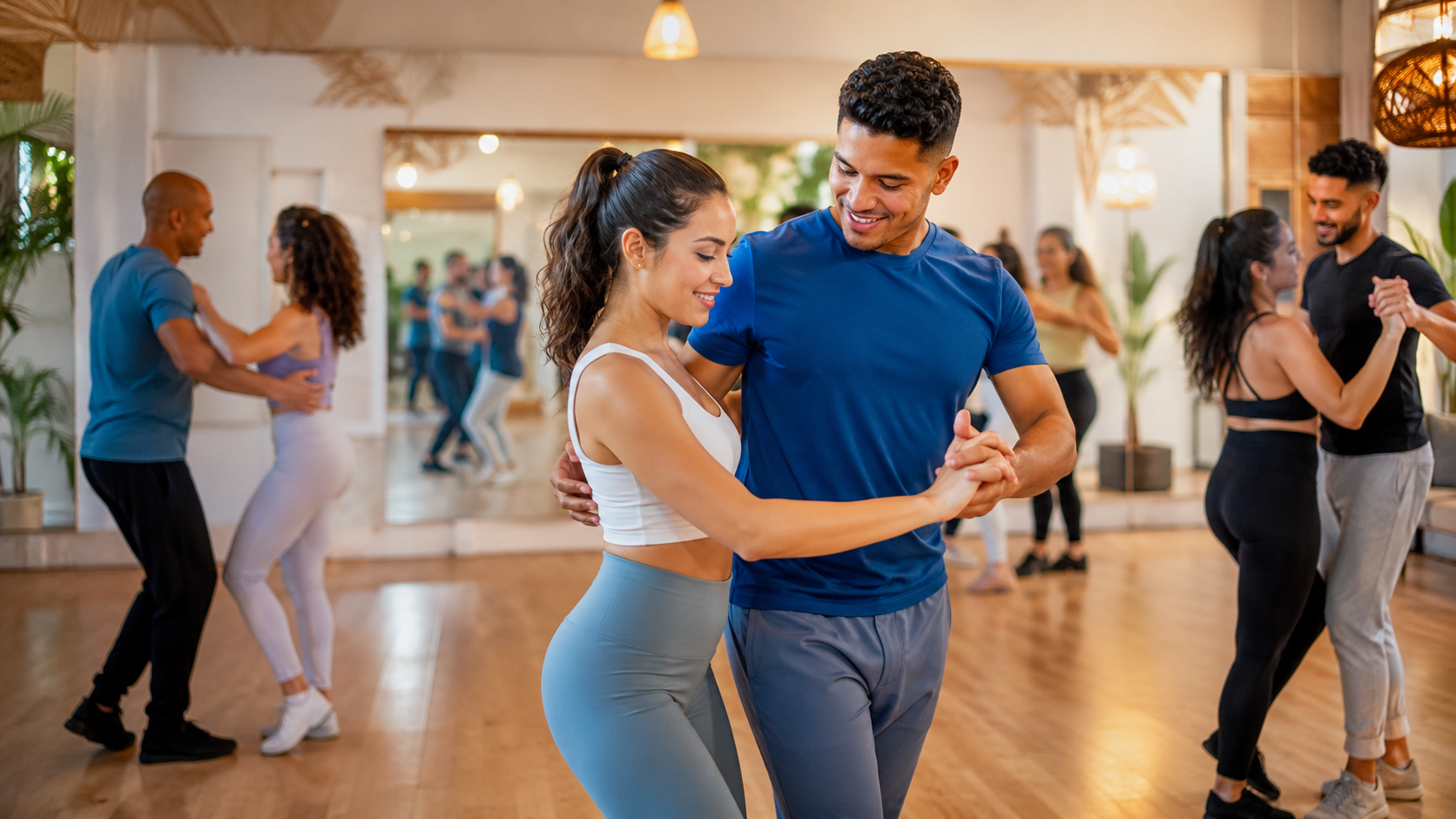
The final 25 minutes — partnerwork: You pair up and apply what you worked on solo. The class rotates through a few different partners. This is the moment most people expect to dread — dancing with strangers — and also the moment most people find surprisingly manageable. By the time you pair up, everyone in that room has been working on the same exact thing with you for half an hour. Nobody is a stranger anymore.
Pro Tip: The moment beginners usually exhale and relax is during partner rotation. Once you see that the person across from you is working through the same uncertainty you are, the intimidation drops surprisingly fast.
What instructors are actually doing throughout class: circulating, giving gentle corrections, calling counts, and running a space where mistakes are feedback and not a reason to stop. You won't be asked to perform for the group. You won't be singled out. The class is a practice room — that's the whole point of it.
| Time | What Happens | Partner? |
|---|---|---|
0–10 min | Warm-up — light movement, get loose, transition into music | Solo |
10–35 min | Footwork foundations — basic step, weight transfer, hip accent, counting | Solo |
35–50 min | Partnerwork — apply footwork with a partner; rotate through the class | Yes — rotates |
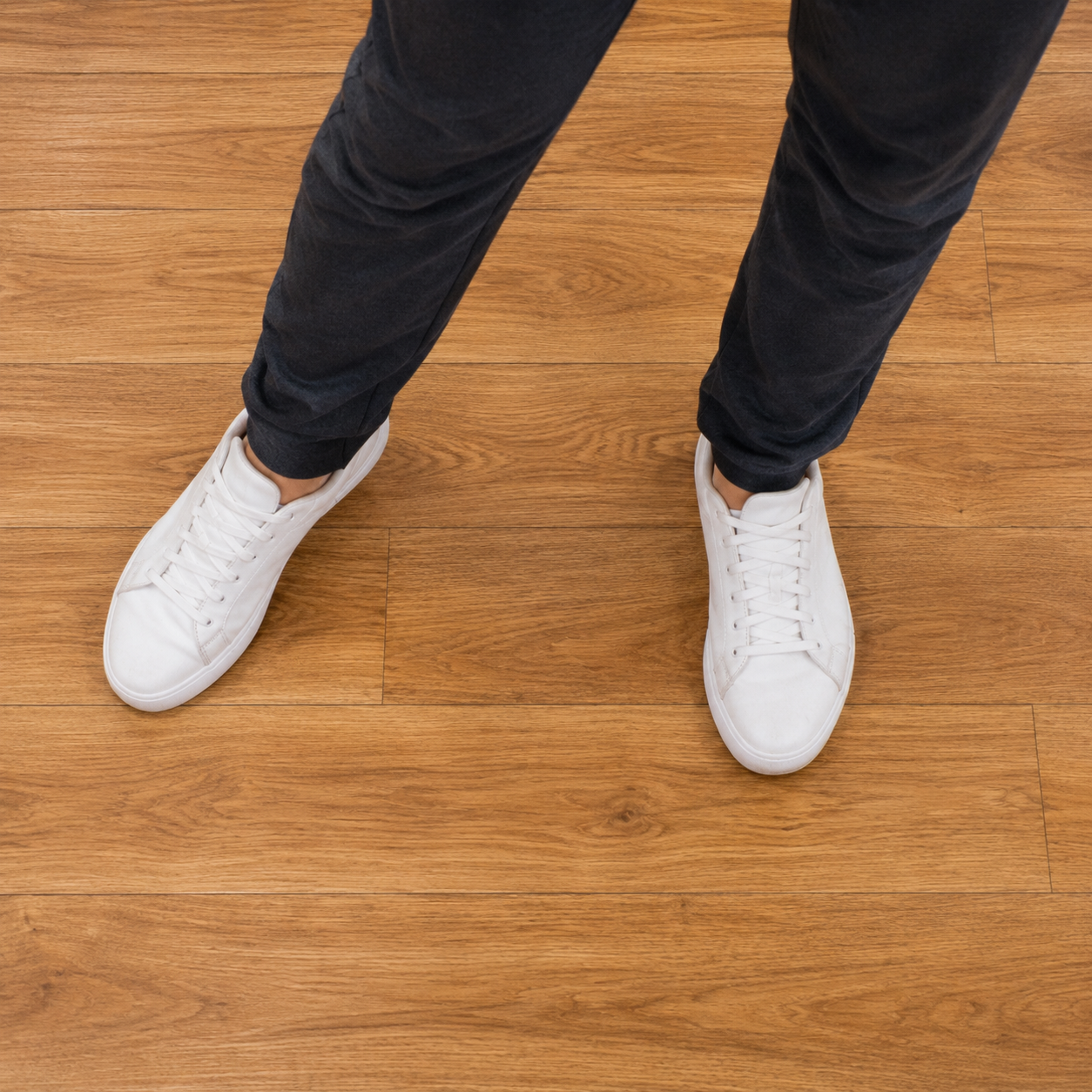
The basic step is always the starting point — and it is more forgiving than it looks.
1. The 4-count side step
Step to the right (1), bring your feet together (2), step right again (3), then tap or accent on (4). One full phrase. Repeat to the left. This is the entire foundation — and every other Bachata move you'll ever learn lives somewhere in that structure.
2. The hip accent
The hip movement isn't something you produce consciously — it comes from a full weight transfer onto each step. Beginners who try to force it end up looking stiff even while doing the right thing. Let the weight shift happen completely, and the hip follows on its own. Instructors will cue this specifically.
3. The forward-and-back basic
Once the side step has a little life in it, the next step introduces front-and-back movement. This opens up the partner frame and makes the first connection feel like dancing rather than standing opposite each other and stepping sideways in sync.
4. The basic closed hold and first turn
Most beginner classes introduce a gentle closed hold and a simple right turn for the follower within the first few sessions. This is when Bachata starts to feel like the dance you've seen.
For a step-by-step breakdown with count cues and footwork details for your first few classes, Beginner Bachata Stepscovers it from the ground up.
Common Beginner Mistakes — and the Quick Fix
| Common Mistake | Quick Fix |
|---|---|
Looking down at your feet | Fix your gaze at shoulder height. Your feet learn faster when you stop supervising them. |
Forcing the hip movement | Commit fully to each weight shift. The hip accent is a byproduct, not a goal. |
Holding your breath | Exhale on every accent (count 4 and 8). Breathing keeps your body loose enough to move. |
Stepping before the beat | Slow down deliberately. Count out loud if you need to — nobody minds. |
Gripping your partner too tightly | Relax the hand frame. A light, responsive hold communicates better than a locked one. |
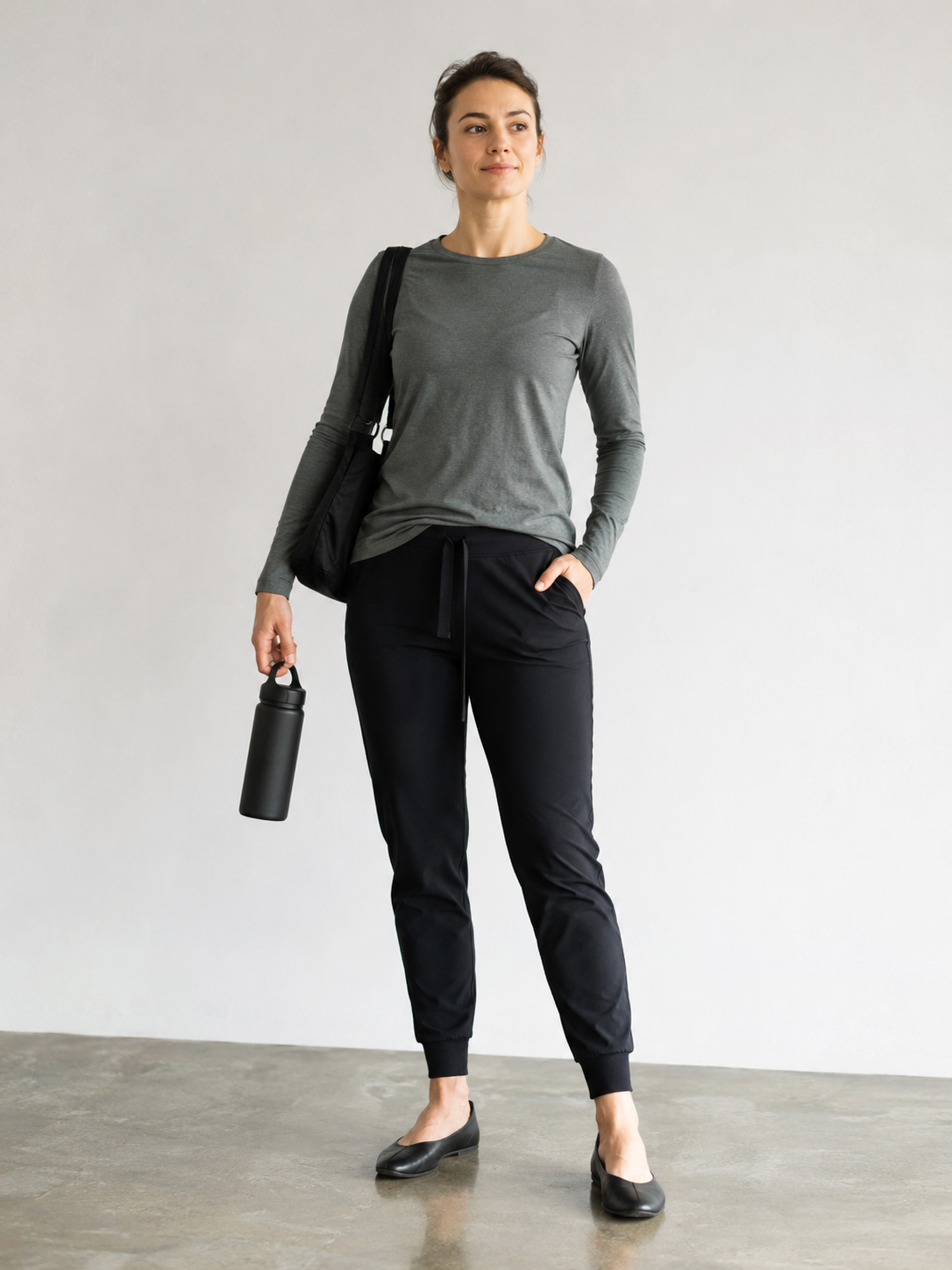
Your clothing doesn't need to say "dancer" — it just needs to let you move.
For everyone:
Breathable, flexible clothing you can step wide in. A good test: if you can't comfortably lunge in it, it will get in the way.
Avoid restrictive jeans, formal trousers, or anything with a tight waistband that fights against hip movement.
For followers:
A fitted skirt or athletic pants both work well. Very long, flowing skirts limit your footwork visibility, which makes it harder to self-correct early on.
For leaders:
Soft chinos or athletic pants. Avoid stiff dress trousers — they restrict how naturally your weight transfers.
Shoes
This matters more than most beginners expect. A chunky running shoe makes it genuinely harder to feel your weight shift and pivot cleanly — the sole works against the floor instead of with it. A smooth-soled or leather-soled shoe, even a casual one, makes the basic step noticeably easier.
You don't need dedicated dance shoes for your first class. But if you decide Bachata is for you, it's one of the more useful early investments.
☐ Water bottle —class is active; you will need it
☐ Small towel —you will sweat; this is normal and expected
☐ Smooth-soled shoes —or flat athletic shoes if that's what you have
☐ Comfortable clothes —breathable, flexible, no restrictive waistband
☐ Fresh hygiene —shower, brush teeth; you will be dancing close to people
☐ Willingness to laugh at yourself —comes in more useful than anything else on this list.
For the mindset side of arriving for the first time — what to expect emotionally and how to set yourself up — preparing for your first dance class covers it in the kind of practical detail that actually helps.
Honest answer: yes — with conditions.
A handful of videos before your first class can be genuinely useful. Getting familiar with what the basic step looks like, and what Bachata actually sounds like, takes some of the first-class newness away. For the music: Juan Luis Guerra, Romeo Santos, and Prince Royce are good starting points for the rhythm and feel. For movement reference, beginner-specific tutorials — not competition or performance videos — give you a realistic picture of what class will work on.
What to avoid is the six-hour YouTube spiral. Internalizing too much technique before you've ever felt the music in your body can make your first class harder — you'll be trying to match a mental model instead of listening to the instructor and feeling the beat. The best use of pre-class videos is to get curious, not prepared. One clear image of the basic step and a few minutes of the music is all you need.
A practical test: if watching a video makes you want to try it, keep watching. If it makes you feel more behind than you did before you started, stop. Just show up.
Your first Bachata class isn't a test — it's a beginning. The rhythm makes sense faster than you expect, the community is more welcoming than the anxiety suggests, and the "not knowing" feeling fades within the first rotation.
Your first class at RF Dance in Santa Ana is $10. Come as you are and join our bachata dance classes in Orange County — the floor is ready when you are.
Experience Salsa, Bachata, or Cumbia with Orange County’s favorite homegrown dance school- RF Dance. Sign up now and get your first class for only $5!
Unedited reviews from people who walked in without a partner and without a clue.
“RF Dance is an amazing place. The instructors are encouraging and passionate, and my daughter looks forward to her classes every single week.”Sophia M.