 RF Dance


Bachata
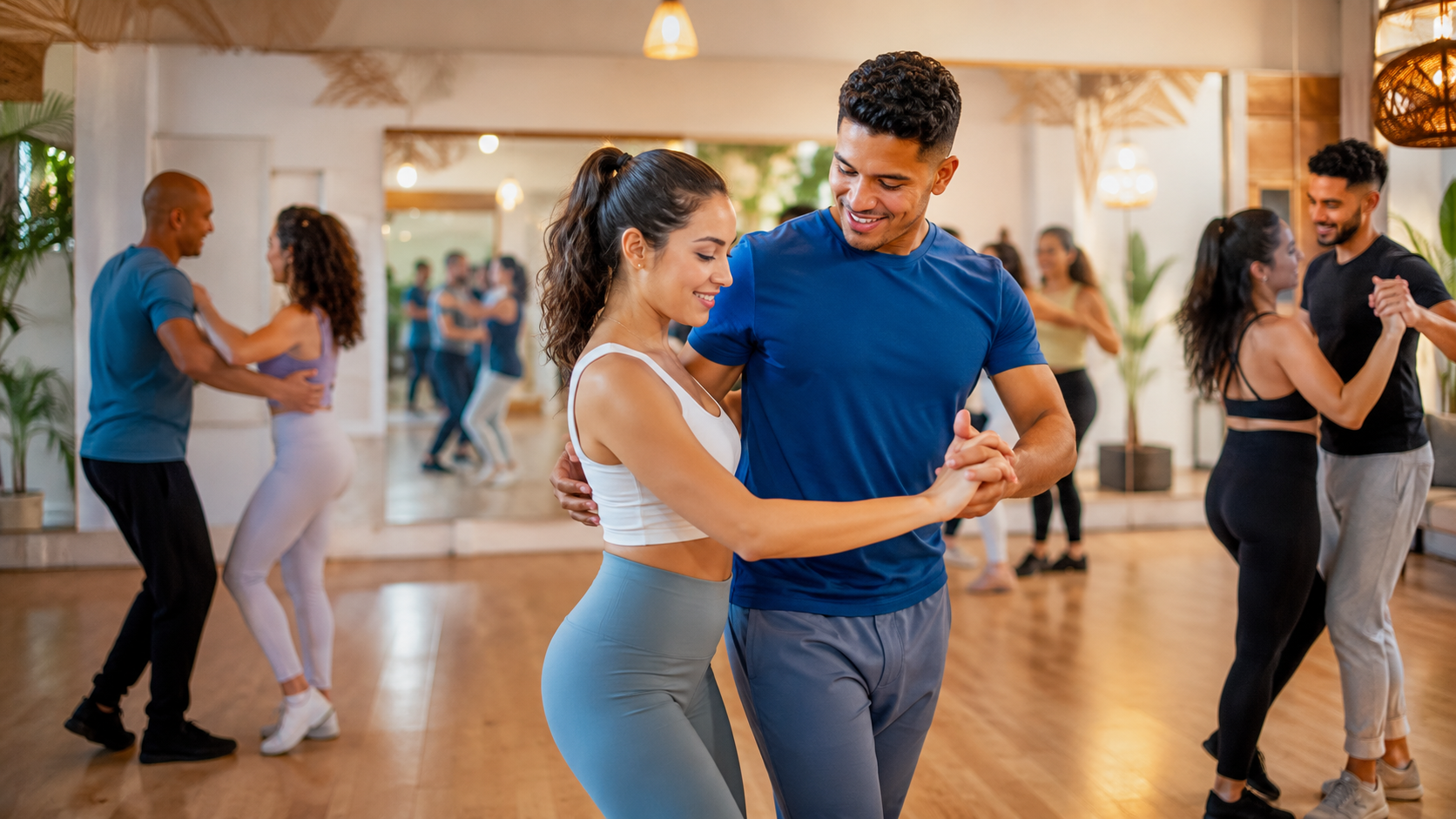
Learning proper partner connection and basic posture is the first step in mastering sensual bachata.
The secret to sensual bachata for beginners isn't learning every impressive move you see online. It's understanding your footwork, getting comfortable with the music, and learning to control your body one movement at a time.
And who better to learn from than someone who knows the dance inside out? Michael Zuniga, owner of RF Dance, is an international Bachata champion and Latin dance technique expert. His studio's teaching approach puts the foundations first, helping dancers develop their steps, timing, partner connection, and musicality.
This guide will show you the sensual bachata moves to learn first, how to practise body waves, how partner connection works, and what you can do at home before your next class.
Ready? Let's get those feet moving!
Sensual bachata is a modern interpretation of bachata that combines basic steps with flowing body movements, isolations, musical expression, and connected partnerwork.
You may also hear it called bachata sensual. It's the style famous for smooth transitions, controlled torso movements, and expressive dancing that follows the music.
Here's what goes into it.
Element | What it means when you dance |
Footwork | Your steps follow the rhythm and keep you balanced. |
Body movement | Your chest and torso move with control instead of tension. |
Musicality | You adapt your movements to the rhythm, melody, and changes in the music. |
Partner connection | You communicate movements through clear signals and comfortable contact. |
Styling | You add your own expression without losing your timing. |
The main difference is the emphasis on movement and musical interpretation. Traditional Dominican bachata is closely connected to the dance's Dominican roots, with an emphasis on footwork, rhythm, natural hip movement, and musical variation. Sensual bachata emphasizes flowing torso movements, body isolations, and connected partnerwork.
Both belong to the wider family of bachata styles. Neither is a replacement for the other, and dancers can enjoy learning both.
This video breaks down the 3 types of bachata and shows how each style looks in practice. It's a helpful way to understand the differences before you start learning sensual bachata yourself.
Watch: 3 Types of Bachata: Traditional/Dominican, Sensual, Modern/Urban
UNESCO added the music and dance of Dominican bachata to its Representative List of the Intangible Cultural Heritage of Humanity in 2019. The recognition celebrates bachata's importance to Dominican cultural life.
Start with the basic side step, weight transfer, and tap. These sensual bachata basic steps give you a foundation for more complex movements later.
You don't need a dramatic turn or a body wave on your first attempt. Get your feet comfortable with the rhythm first. Once your steps start feeling natural, you can give more attention to your body movement.
Want to see how it works rather than trying to picture it from words? Watch here.
And if you're interested in the history of bachata dance, take a look at our guide to bachata's origins, evolution, and popularity.
A common beginner side basic follows three steps and a tap in each direction.
Count | Movement | Your focus |
1 | Step left with your left foot. | Keep your knees relaxed. |
2 | Bring your right foot towards your left. | Transfer your weight naturally. |
3 | Step left again. | Stay connected to the beat. |
4 | Tap your right foot beside your left. | Tap without transferring your weight onto that foot. |
5 | Step right with your right foot. | Begin moving in the opposite direction. |
6 | Bring your left foot towards your right. | Stay balanced. |
7 | Step right again. | Keep your movement comfortable. |
8 | Tap your left foot beside your right. | Complete the pattern and repeat. |
Some instructors teach variations of the basic step, so follow the version used in your class.
Your first goal is to repeat the pattern without having to think about every foot placement. Once that feels comfortable, you can start working on your weight transfer and natural body movement.
Curious about the different bachata dance styles? Our guide to bachata styles, origins, and key differences explains how the main styles differ.
This is where beginners often get frustrated. You watch someone move their hips naturally, try to copy them, and suddenly your whole body feels stiff.
There's a simpler approach.
RF Dance's published guide to your first bachata class explains that hip movement follows a full weight transfer. Trying to force the hips before understanding the step can make the movement look stiff.
Try this four-step exercise:
Step onto one foot and transfer your weight fully.
Keep your knees relaxed instead of locking them.
Allow the hip movement to follow your weight transfer.
Repeat on the other side without exaggerating the movement.
That's it. You're not trying to manufacture a dramatic hip pop with every step. You're learning to let your movement follow the rhythm.
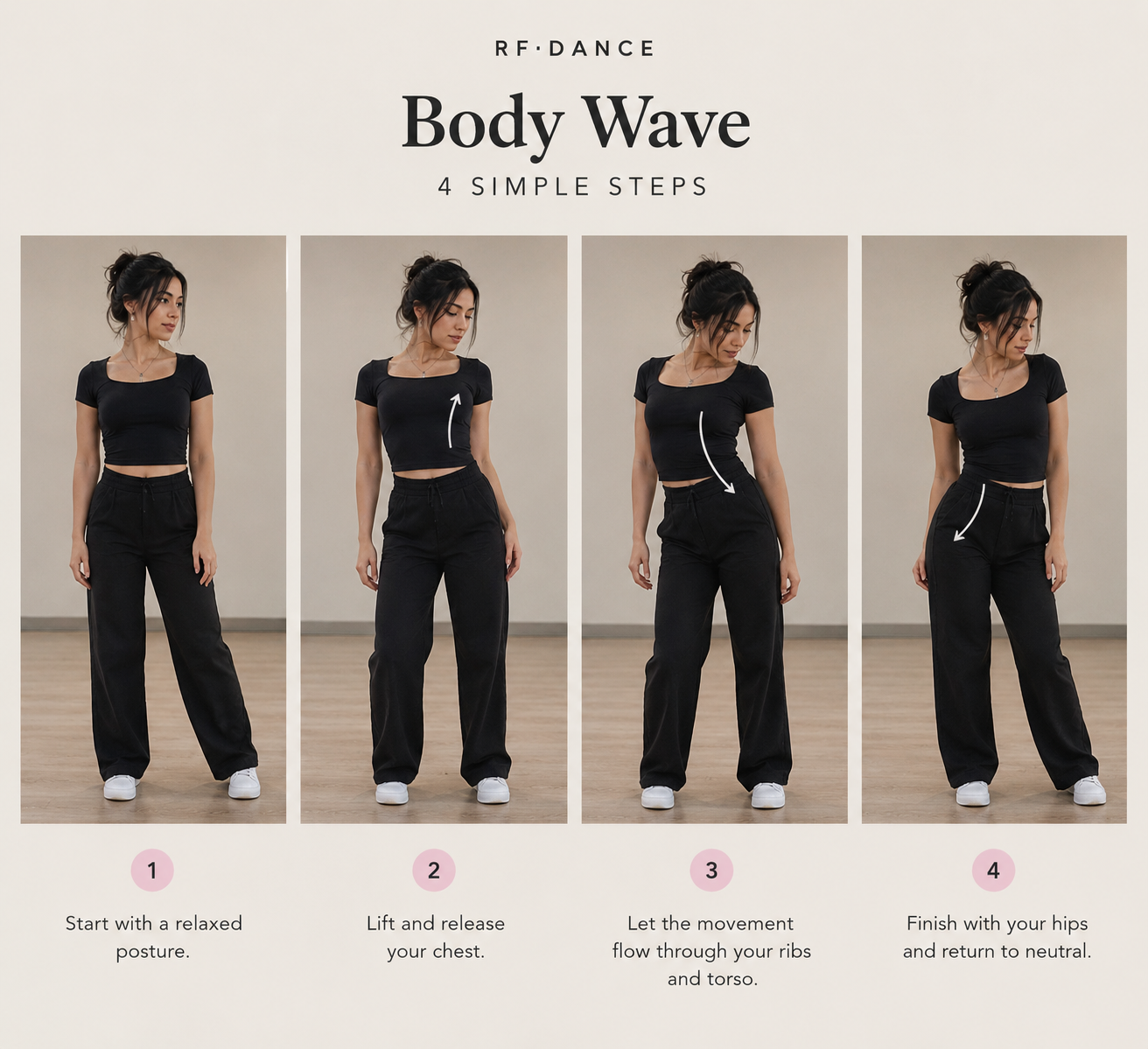
Follow these 4 simple steps to execute a smooth, controlled sensual bachata body wave.
A body wave is a flowing movement that travels through your torso in a controlled sequence. In sensual bachata, it adds the smooth, expressive quality you often see in performances.
But here's what beginners sometimes miss: a body wave isn't about throwing your entire body around. It's about controlling the movement and letting each part flow into the next.
Step 1: Find a comfortable posture.
Stand with your feet comfortably apart, knees relaxed and shoulders down. Keep your head and neck in a natural position.
Step 2: Start with a small chest movement.
Gently lift and release your chest. Avoid throwing your head backwards or forcing your lower back into a deep arch.
Step 3: Practise your rib movement.
Work on coordinating your ribs with your chest. Keep the movement small enough that you can feel what your body is doing.
Step 4: Connect the movements.
Begin joining the individual movements into a smooth sequence through your torso. Different instructors may teach slightly different body wave techniques, so follow your instructor's demonstration.
Bonus Step 5: Repeat slowly before adding music.
Practise a few comfortable repetitions. When you can control the movement, try it with music at a speed that lets you stay relaxed.
Don't rush this part. A small, controlled wave is a much better starting point than a large movement you can't comfortably repeat.
Body area | What to aim for | What to avoid |
Chest | Small, controlled movements | Throwing your chest forward suddenly |
Ribs | Smooth coordination | Tensing your shoulders |
Spine | Comfortable movement | Forcing a deep back arch |
Head and neck | A relaxed, natural position | Throwing your head backwards |
Overall movement | A smooth sequence | Making the wave unnecessarily large |
Stop if a movement causes pain or discomfort. You don't need extreme flexibility to begin learning body movement, and you should never force your spine or neck to copy an advanced dancer.
Once you're comfortable with the basic step and a simple body wave, you can start exploring other sensual bachata moves.
Here are three useful foundations to explore with an instructor.
Movement | What it means | What to practise first |
Chest isolation | Moving the chest while keeping unnecessary movement elsewhere to a minimum | Control and body awareness |
Body roll | A rolling movement through the torso | Smooth transitions between positions |
Hip movement | Coordinating the hips with your steps and weight changes | Relaxation, balance and timing |
A body roll is often taught as a more defined rolling action through the torso. The exact technique depends on the variation and your instructor's method.
Start by understanding the movement slowly. Don't combine it with a turn or partner transition until you can perform it comfortably on its own.
Here's a simple progression:
Learn one movement with your instructor.
Practise it slowly without music.
Repeat it while maintaining the basic rhythm.
Add it to a short sequence only when you feel comfortable.
Ask your instructor for feedback before progressing to a more demanding variation.
The goal isn't to collect as many bachata body waves and bachata body rolls as possible. It's to move with control and make the movements work with the music.
Bachata partner connection is how two dancers communicate through timing, posture, body position, and physical signals. Both people contribute to a connected dance, and both should feel comfortable with the movements.
Here's what that looks like in practice.
Skill | What the leader works on | What the follower works on |
Timing | Communicating movements in time with the music | Staying with the rhythm and responding to the lead |
Frame | Offering clear, comfortable signals | Maintaining a relaxed, responsive connection |
Direction | Communicating changes clearly | Following without guessing ahead |
Body movement | Leading movements within a comfortable range | Responding with control and maintaining balance |
Communication | Respecting the partner's comfort | Expressing preferences and boundaries clearly |
Leader and follower are dance roles, not gender requirements. Anyone can learn either role.
Try this five-step progression:
Get comfortable with the basic step. You should be able to maintain the rhythm without worrying about every foot placement.
Practise a relaxed frame. Avoid gripping your partner's hands or arms too tightly.
Use clear signals. Your partner should be able to understand the movement without being pushed or pulled.
Add one simple transition. Practise a basic change of direction before introducing a body wave.
Communicate throughout the dance. Both dancers should feel comfortable with the movement and level of closeness.
And remember, sensual dancing doesn't mean you must dance closely with every partner or perform every movement you see online. A comfortable, well-connected dance is more important than a dramatic move.
Practise steady timing, relaxed posture, and clear signals. Start with a simple partner sequence, and add more complex movements as your coordination and communication improve.
Learning a new dance is exciting, but trying to master every movement immediately can make the process frustrating.
Here are five common mistakes and what to do instead.
Common mistake | Why it can cause trouble | What to do instead |
Attempting advanced moves too early | You may struggle with balance and control. | Master the basic steps and weight transfers first. |
Forcing the hips | Movement may feel stiff or uncomfortable. | Let the hips follow natural weight changes. |
Making every movement too big | Large movements can be harder to control. | Start small and increase your range gradually. |
Holding tension in the shoulders | Tension can limit comfortable movement. | Relax your shoulders and breathe naturally. |
Copying a partner's movement without understanding it | You may lose timing or balance. | Learn the movement slowly with suitable instruction. |
The solution isn't to practise harder every time something goes wrong. Sometimes you simply need to slow down and give your body time to understand the movement.
You can practise the foundations on your own. Solo practice helps you become familiar with the rhythm, improve your body awareness, and feel more comfortable with the basic steps.
However, practising alone can't completely replace partnerwork. You can prepare your movements at home, but learning to communicate with another dancer requires practice with another person.
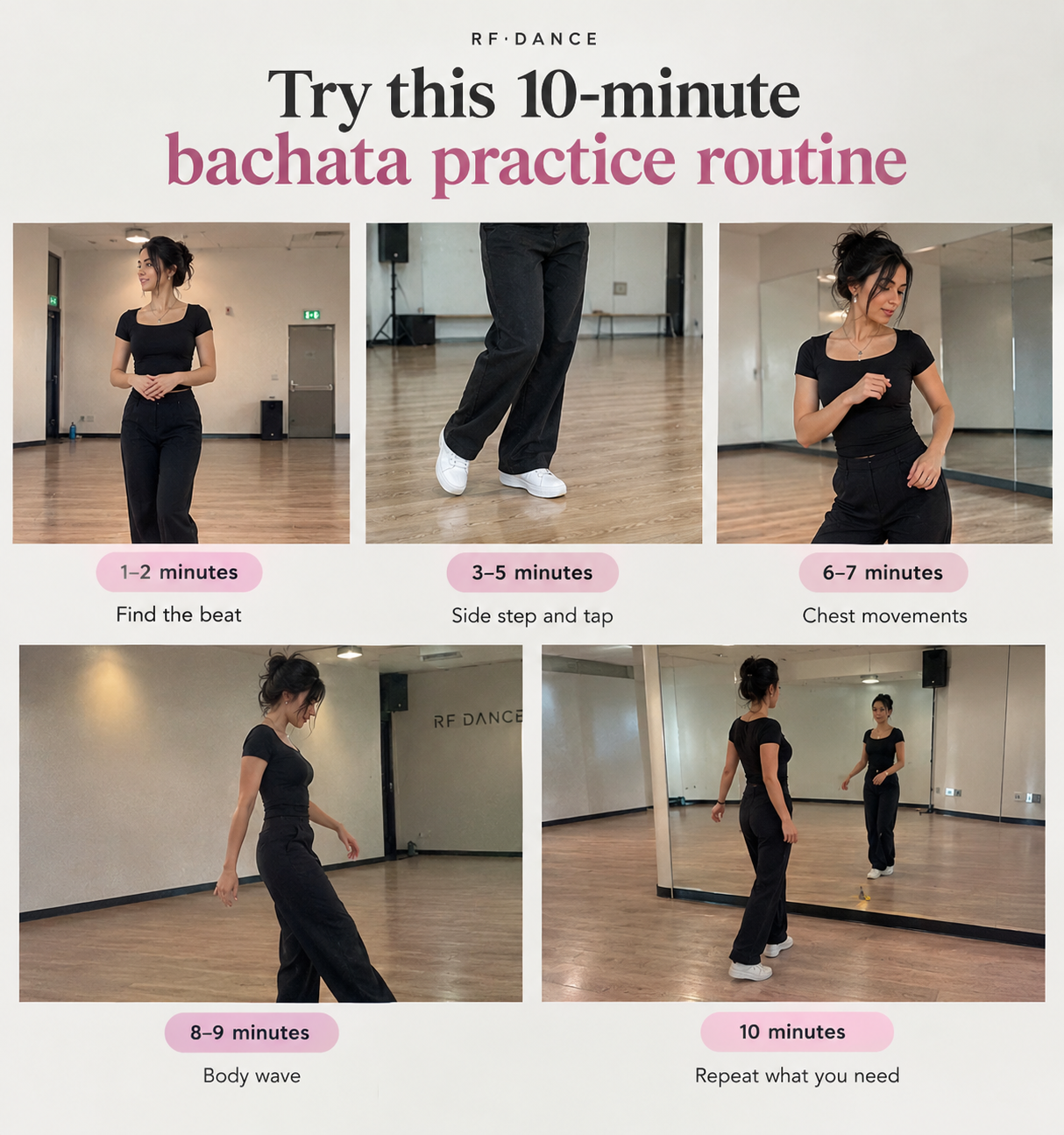
A 10-minute solo home practice routine helps solidify your basic steps, chest isolations, and body waves between classes.
Time | What to practise | Your goal |
Minutes 1 and 2 | Listen to the music and find the beat. | Get familiar with the rhythm. |
Minutes 3 to 5 | Practise the basic side step and tap. | Keep your steps steady and balanced. |
Minutes 6 and 7 | Practise small chest movements. | Improve body awareness. |
Minutes 8 and 9 | Practise a gentle body wave within your comfortable range. | Build control and coordination. |
Minute 10 | Repeat the movement that needs the most work. | Finish with one clear skill to improve. |
You don't need to dance at full speed. Move slowly enough to understand what your body is doing.
Keep these three rules in mind:
Focus on one skill at a time. Don't try to combine every movement immediately.
Keep your movements comfortable. You don't need extreme flexibility to begin.
Practise consistently. Short, focused sessions can help you become more familiar with the movements.
Once the foundations start feeling natural, you'll have a better starting point for dancing with a partner.
Watching tutorials can help you understand a movement, but they can't watch your technique, correct your posture, or respond to the way you dance.
That's where a class makes a difference.
At RF Dance in Santa Ana, Bachata classes help students develop footwork, timing, partner connection, turns, combinations, and musicality. The studio offers different levels, including options for beginners. Currently listing a $10 first-class offer.
And here's something that makes starting less intimidating: you don't need to bring a partner. RF Dance welcomes solo sign-ups for its group classes, where students can practise with other dancers.
Explore RF Dance's Bachata classes in Orange County to check the available levels, class times, and booking options.
Your experience | A suitable starting point |
You've never danced bachata before. | Bachata Basic: Learn the essential steps, rhythm, and timing. |
You know the basics and want to improve your technique. | Bachata Fundamental: Develop your technique, weight transfers, and connection. |
You're ready to work on partner patterns. | Bachata Beginner: Practise partnerwork, combinations and lead and follow skills. |
You have a solid foundation and want more challenging material. | Bachata Open Level: Continue developing musicality, styling and partnerwork. |
These are general starting points based on RF Dance's published class descriptions. Check the current schedule and level requirements before booking.
Experience Salsa, Bachata, or Cumbia with Orange County’s favorite homegrown dance school- RF Dance. Sign up now and get your first class for only $5!
Unedited reviews from people who walked in without a partner and without a clue.
“RF Dance is an amazing place. The instructors are encouraging and passionate, and my daughter looks forward to her classes every single week.”Sophia M.